

When Policy Rewrites the Dictionary: The .si Domain Gold Rush and the Making of a “Super Intelligence” Economy
A single executive order, a two letter country code, and a global scramble for digital real estate. What Slovenia’s unexpected windfall reveals about the new economics of naming.
Introduction: The Power of a Word
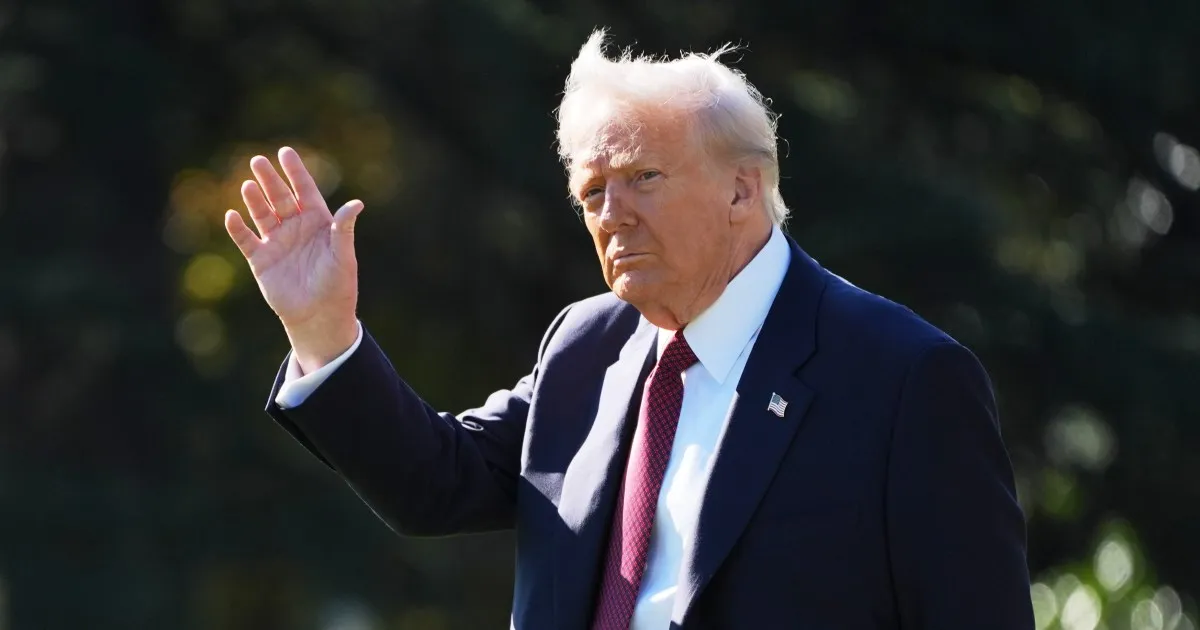
On September 29, 2026, President Trump signed an executive order with a deceptively simple directive: every federal agency would now refer to “AI” and “artificial intelligence” as “SI” and “super intelligence.”
The stated rationale was philosophical as much as technological. Today’s frontier systems, the order argued, “do much more than imitate or automate discrete aspects of human intelligence” and “increasingly represent not merely artificial intelligence but a new super intelligence.”
But while policymakers debated semantics, something far more tangible was happening in the obscure corners of the internet’s infrastructure. Within 48 hours, the .si domain, the country code top level domain (ccTLD) for Slovenia, experienced a registration surge that its own registry described as unprecedented.
It’s a story about how a linguistic shift at the highest levels of government can ripple through markets, create speculative frenzies, and potentially reshape the digital identity landscape for years to come. And it raises uncomfortable questions about what happens when branding, policy, and opportunism collide.
The Numbers: A 2,199% Surge
The statistics emerging from Slovenia’s domain registry are staggering.
Klara Herman, a spokesperson for Registry SI, told the BBC that .si domain purchases jumped 2,199% in September alone. On September 30, the day after the executive order was signed, the registry recorded 11,000 new addresses. Within the following 24 hours, that figure climbed to nearly 13,000.
Hostinger, one of the world’s largest web hosting platforms, offered even more granular data. The company reported that:
- ~4,300 .si domains were registered by its customers on September 30
- ~5,400 were registered on October 1
- More than three quarters of all .si registrations since September 23 occurred in just those two days
- More than half of buyers came from the United States and India
Perhaps most tellingly, .si is now Hostinger’s second most popular domain extension, trailing only the ubiquitous .com.
The Anguilla Precedent: When a Domain Becomes an Economy
To understand why this matters, we need to revisit what happened with .ai.
The .ai domain belongs to Anguilla, a tiny British Overseas Territory in the Caribbean with a population of roughly 15,000. When the artificial intelligence boom began in earnest, particularly after the release of ChatGPT in late 2022, .ai registrations exploded. The territory, which had historically relied on tourism and fishing, suddenly found itself with a digital gold mine.
The numbers were transformative. Anguilla’s government charges a premium for .ai domains, and that revenue flows directly into the treasury. At its peak, .ai domain registrations were generating tens of millions of dollars annually, a sum that, for a small island economy, effectively became a second economy.
The .ai boom demonstrated something profound: in the digital age, a country code can become a brand, and a brand can become a revenue stream. It also revealed how quickly the global economy can reorganize itself around a single technological narrative.
Now, with Trump’s executive order, the question is whether .si can replicate that success.
Why .si Is Not .ai: The Structural Differences
Klaudijus Januitis, Head of Domains at Hostinger, is cautious about drawing direct parallels.
“Slovenia will not see what Anguilla saw,” he told TechCrunch.
His reasoning is both economic and structural:
1. Pricing and Revenue Flow
- .ai domains cost around $90 per year with a two year commitment, and that money goes directly to the Anguillan government.
- .si domains cost approximately $12 per year on Hostinger, and that revenue goes to the registry, not the Slovenian treasury.
“For Anguilla, .ai became a second economy,” Januitis explained. “For Slovenia, .si is a nice bonus.”
2. Supply and Availability
The .ai namespace is relatively constrained, and premium domains command extraordinary prices. The .si namespace, by contrast, is more available and more affordable, making it attractive as a “second option” rather than a direct replacement.
3. Brand Association
While .ai is now inextricably linked to artificial intelligence, .si carries no such inherent semantic weight. It is, first and foremost, Slovenia’s country code, a fact that adds an ironic layer to the story, given that First Lady Melania Trump was born in Slovenia.
The Speculative Element: Digital Collectibles and Tokenized Domains
Not everyone buying .si domains is doing so to build a website.
Kim Than, CEO of Genius PR, a firm specializing in AI and crypto founders, told TechCrunch he purchased the .si version of his company name “to protect the brand in case this takes off like .ai.”
“It was cheap,” he said. “I figured I might as well secure it now than potentially pay a lot more later.”
Than sees domain names as digital collectibles, assets that can appreciate, be resold, or even tokenized on the blockchain. While he’s unsure whether .si is currently supported for tokenization, the possibility alone speaks to a broader trend: the financialization of internet infrastructure.
“A few founder friends are buying too ’cause we think it’s the new AI boom,” he added. “Who knows how far it goes, but I’m happy to take a bet.”
This speculative dynamic is not new. Domain flipping has been a cottage industry for decades. But the combination of policy driven demand, crypto native thinking, and AI hype has created a uniquely volatile environment.
The Data Paradox: Most .si Buyers Aren’t AI Companies
Here’s where the story gets particularly interesting.
Despite the surge being triggered by an AI related executive order, only about 3% of .si domains registered on Hostinger are explicitly related to AI. The vast majority are “unclassified,” meaning their names don’t match any specific category.
This suggests that the rush is driven less by genuine AI industry demand and more by:
- Speculation, buyers hoping to resell at a premium
- Brand protection, companies securing their names defensively
- FOMO, founders and investors reacting to a perceived market shift
- Opportunism, individuals and businesses capitalizing on a news cycle
In other words, the .si boom is as much a psychological phenomenon as an economic one. It reflects a market primed to react, instantly and sometimes irrationally, to signals from the highest levels of power.
The Semiotics of “Super Intelligence”
Why did a terminology change trigger such a reaction?
The answer lies in the power of language to shape markets.
“Artificial intelligence” has become a loaded term, associated with both utopian promise and existential risk. “Super intelligence,” by contrast, carries a different weight. It implies transcendence, dominance, and inevitability. It suggests that we are not merely building tools, but creating something greater than ourselves.
By mandating this linguistic shift, the executive order did more than change a label. It reframed the narrative, and narratives drive investment.
The .si domain became a symbolic shorthand for this new framing. It was not just a country code; it was a bet on a future in which “super intelligence” becomes the dominant paradigm.
The Risks: Bubble Dynamics and Unintended Consequences
The .si surge carries several risks.
- Speculative Bubble
- If the demand is driven primarily by speculation rather than genuine utility, prices could collapse once the hype fades. Late buyers, particularly those who paid premium prices on the secondary market, could face significant losses.
- Brand Confusion
- Slovenian businesses and individuals may find their national domain increasingly crowded by foreign entities with no connection to the country. This could dilute the .si brand and create confusion.
- Policy Volatility
- The surge is tied directly to a single executive order. If that order is reversed, modified, or superseded, the rationale for .si could evaporate overnight.
- Infrastructure Strain
A sudden influx of registrations could strain registry systems, leading to technical issues, delays, or security vulnerabilities.
The Broader Implications: Domains as Geopolitical Assets
The .si story is part of a larger trend: the geopoliticization of internet infrastructure.
Country code top level domains were originally designed as neutral identifiers. But in an era of technological competition, they have become assets, capable of generating revenue, projecting soft power, and signaling alignment with emerging paradigms.
- .ai became synonymous with the AI revolution.
- .io (British Indian Ocean Territory) became a favorite of startups and crypto projects.
- .co (Colombia) was rebranded as a startup friendly alternative to .com.
- .si may now be emerging as the next frontier.
This raises questions about who benefits from these developments. In Anguilla’s case, the windfall went to the government. In Slovenia’s case, the gains are more diffuse, flowing to the registry, to speculators, and to hosting platforms like Hostinger.
Is there a more equitable way to manage these windfalls? Should countries capture more of the value generated by their digital identities? These are questions that will only grow more pressing as the digital economy continues to evolve.
The View from Slovenia: Caution Amid the Boom
Registry SI’s Klara Herman was notably cautious about attributing the surge solely to Trump’s executive order.
While the timing is suggestive, correlation is not causation. Other factors, including broader domain market trends, marketing campaigns, and organic growth, may also be contributing.
Still, the registry has not been shy about promoting .si as a global option. And with Hostinger reporting that .si is now its second most popular extension, the domain’s profile has clearly risen.
For Slovenia, the question is whether this moment represents a sustainable opportunity or a transient spike. The answer may depend on whether .si can develop a genuine identity beyond its association with a single policy decision.
The Founder’s Perspective: “The New AI Boom”
For founders like Kim Than, the calculus is simple: the cost of entry is low, and the potential upside is high.
“It’s still early so that could change,” a Wix spokesperson noted, reflecting the uncertainty that pervades the market. But for those willing to take a bet, .si represents a cheap option on a big idea.
Than’s strategy, buying the .si version of his company name, encouraging founder friends to do the same, and considering resale or tokenization, is emblematic of a new mindset. Domains are no longer just addresses; they are assets, collectibles, and bets on the future.
Whether that bet pays off remains to be seen. But in a world where a single executive order can trigger a 2,199% surge in registrations, the line between policy and speculation has never been blurrier.
Conclusion
The .si domain surge is a story about many things: the power of language, the speed of markets, the allure of speculation, and the strange ways in which geopolitics and technology intersect.
It is also a reminder that in the digital economy, naming matters. The words we use to describe technology shape how we invest in it, how we regulate it, and how we imagine its future.
When the White House decided to call AI “super intelligence,” it did more than change a label. It created a new category, and in doing so, it opened a door for Slovenia, for speculators, and for anyone willing to bet on a two letter domain.
Whether .si becomes the next .ai or remains a footnote in the history of domain speculation, one thing is clear: the game has changed. And in this game, the winners will be those who understand that in the 21st century, a country code is not just a country code. It’s a brand, an asset, and sometimes, a lottery ticket.
TechTrib.com is a leading technology news platform providing comprehensive coverage and analysis of tech news, cybersecurity, artificial intelligence, and emerging technology. Visit techtrib.com.
Contact Information: Email: [email protected] or for adverts placement [email protected]
About The Author
