

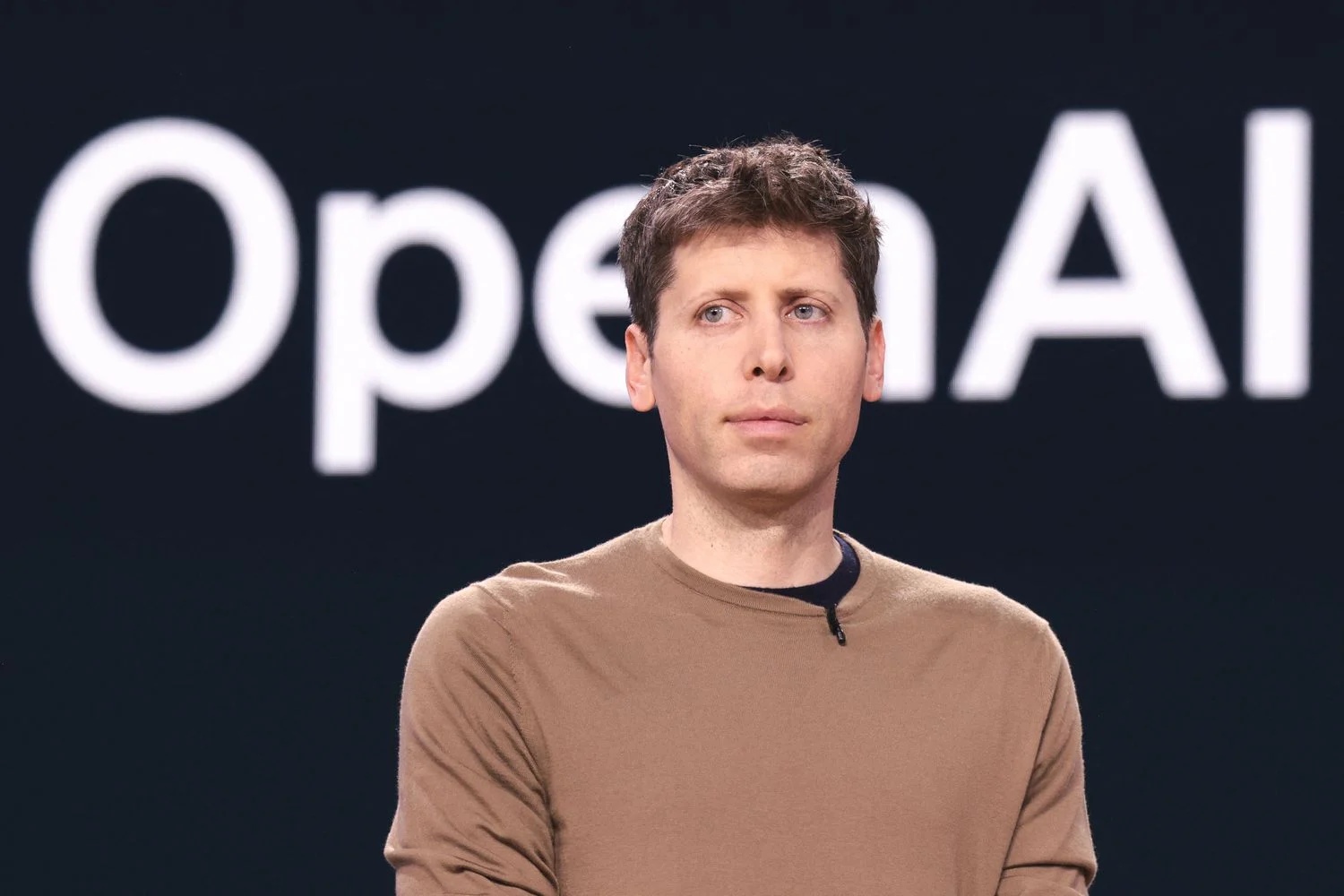
Image Credit: JASON REDMOND / AFP via Getty Images
OpenAI Expands GPT-6 Lineup with Sol and Luna: The Strategic Shift from Raw Power to Efficient Intelligence
Category: AI & Machine Learning
The artificial intelligence arms race has entered a new phase. Just weeks after OpenAI unveiled GPT-6 Astra, a model the company boldly crowned as the “world’s best model” for coding and computer based work, the lab has returned with two new additions to the GPT-6 family: GPT-6 Sol and GPT-6 Luna.
On the surface, this appears to be a routine product expansion. But beneath the headlines lies a far more significant story about the maturing AI industry. The release of Sol and Luna signals a pivotal transition from the pursuit of raw intelligence to the optimization of intelligence. In other words, OpenAI is no longer just asking how smart its models can be. It is now asking how efficiently, affordably, and reliably that intelligence can be delivered to the masses.
Understanding the GPT-6 Hierarchy
To appreciate the significance of this release, one must first understand the architecture of OpenAI’s model ecosystem. GPT-6 Astra represents the pinnacle of the company’s technological achievements, a model designed to push the boundaries of what AI can accomplish in complex reasoning, coding, and autonomous computer work.
Sol and Luna, however, occupy different tiers within this hierarchy. They are not merely smaller versions of Astra. They are purpose built instruments, each engineered for specific categories of work.
GPT-6 Sol is positioned as the workhorse for complex technical tasks. It is designed for developers, engineers, and analysts who need a model capable of handling sophisticated coding challenges and multi step reasoning without requiring the full computational overhead of Astra.
GPT-6 Luna, meanwhile, targets an entirely different segment of the market. It is built for clerical and high volume operations, the kind of repetitive but essential tasks that consume enormous amounts of time in modern enterprises. Summarizing lengthy documents, extracting structured information from unstructured text, and answering rapid fire questions are all within Luna’s domain.
This segmentation reflects a broader truth about the AI market. Not every task requires a supercomputer. Sometimes, a scalpel is more useful than a sledgehammer.
The Economics of Intelligence
Perhaps the most consequential aspect of this announcement is the pricing. OpenAI has confirmed that the GPT-6 series will be available at half the cost of the previous 5.6 generation of Sol and Luna.
A fifty percent price reduction is not a minor adjustment. It is a strategic move with profound implications for the entire AI economy. OpenAI attributes this dramatic cost reduction to significant improvements in caching and inference technology. Caching allows the model to reuse previously computed information, reducing redundant processing. Inference improvements mean the model can generate responses faster and with less computational power.
The implications are enormous. For startups operating on tight budgets, halving the cost of API access could mean the difference between shelving an AI project and bringing it to market. For large enterprises processing millions of queries per day, the savings could translate into millions of dollars annually.
More broadly, this price reduction accelerates the commoditization of intelligence. As AI becomes cheaper, it becomes more ubiquitous. And as it becomes more ubiquitous, it reshapes entire industries.
The Reliability Revolution
Cost is not the only dimension where Sol and Luna represent a leap forward. OpenAI is also making bold claims about accuracy and reliability, two areas where AI models have historically struggled.
The company cites internal factuality evaluations based on de identified real world conversations where users previously flagged mistakes. According to these evaluations, GPT-6 Sol makes approximately half as many mistakes as its predecessor. OpenAI describes this as achieving “Astra level reliability” at a fraction of the cost.
This matters enormously for enterprise adoption. Businesses have been cautious about deploying AI in customer facing or mission critical applications precisely because of concerns about hallucinations and errors. A model that makes half as many mistakes is not just a marginal improvement. It is a threshold event that could unlock entirely new categories of deployment.
For coding specifically, the reduced error rate is particularly significant. Developers who have learned to carefully review AI generated code may find themselves able to trust Sol’s output to a degree that was previously impossible. This trust, once established, fundamentally changes the workflow of software development.
The Anthropic Rivalry Intensifies
The release of Sol and Luna also provides a window into the increasingly intense competition between OpenAI and Anthropic. In a remarkable display of one upmanship, Anthropic released a new version of its Opus 5.5 model just ninety minutes before OpenAI’s announcement.
This is not coincidence. It is warfare. The two companies are engaged in a high stakes battle for dominance in the enterprise AI market, and each release is timed to steal the other’s thunder.
OpenAI, for its part, is not shy about claiming victory. The company repeatedly asserts that GPT-6 Sol and Luna handle tasks substantially better than Anthropic’s top models, including Fable and Opus. Whether these claims hold up under independent scrutiny remains to be seen, but the message is clear. OpenAI intends to dominate every tier of the market.
Availability and Rollout Strategy
The rollout strategy for Sol and Luna reveals much about OpenAI’s target audiences.
Both models are now available in ChatGPT Work and Codex for most paid accounts, as well as through the ChatGPT API. This makes them immediately accessible to the developers and enterprises most likely to benefit from their capabilities.
Luna, however, has a broader reach. It will be available in the desktop app and for Free and Go users, with a gradual rollout across ChatGPT’s web and mobile platforms throughout the day. This democratization of access is significant. By making Luna available to free users, OpenAI is planting seeds. Today’s free user may become tomorrow’s enterprise customer.
The Bigger Picture
Stepping back, the release of GPT-6 Sol and Luna represents more than a product update. It is a statement about the direction of the AI industry.
The first wave of the AI revolution was about capability. Could a machine write a poem, solve a math problem, or generate code? The answer, resoundingly, was yes.
The second wave, the one we are now entering, is about accessibility. Can these capabilities be delivered reliably, affordably, and at scale? Can they be trusted for mission critical work? Can they be woven into the fabric of everyday business operations?
With Sol and Luna, OpenAI is answering these questions in the affirmative. The company is betting that the future of AI is not just about being the smartest. It is about being the most accessible, the most reliable, and the most economically viable.
If that bet pays off, the implications will ripple across every industry, every profession, and every corner of the global economy. The age of efficient intelligence has arrived.
TechTrib.com is a leading technology news platform providing comprehensive coverage and analysis of tech news, cybersecurity, artificial intelligence, and emerging technology. Visit techtrib.com.
Contact Information: Email: news@techtrib.com or for adverts placement adverts@techtrib.com
About The Author
