

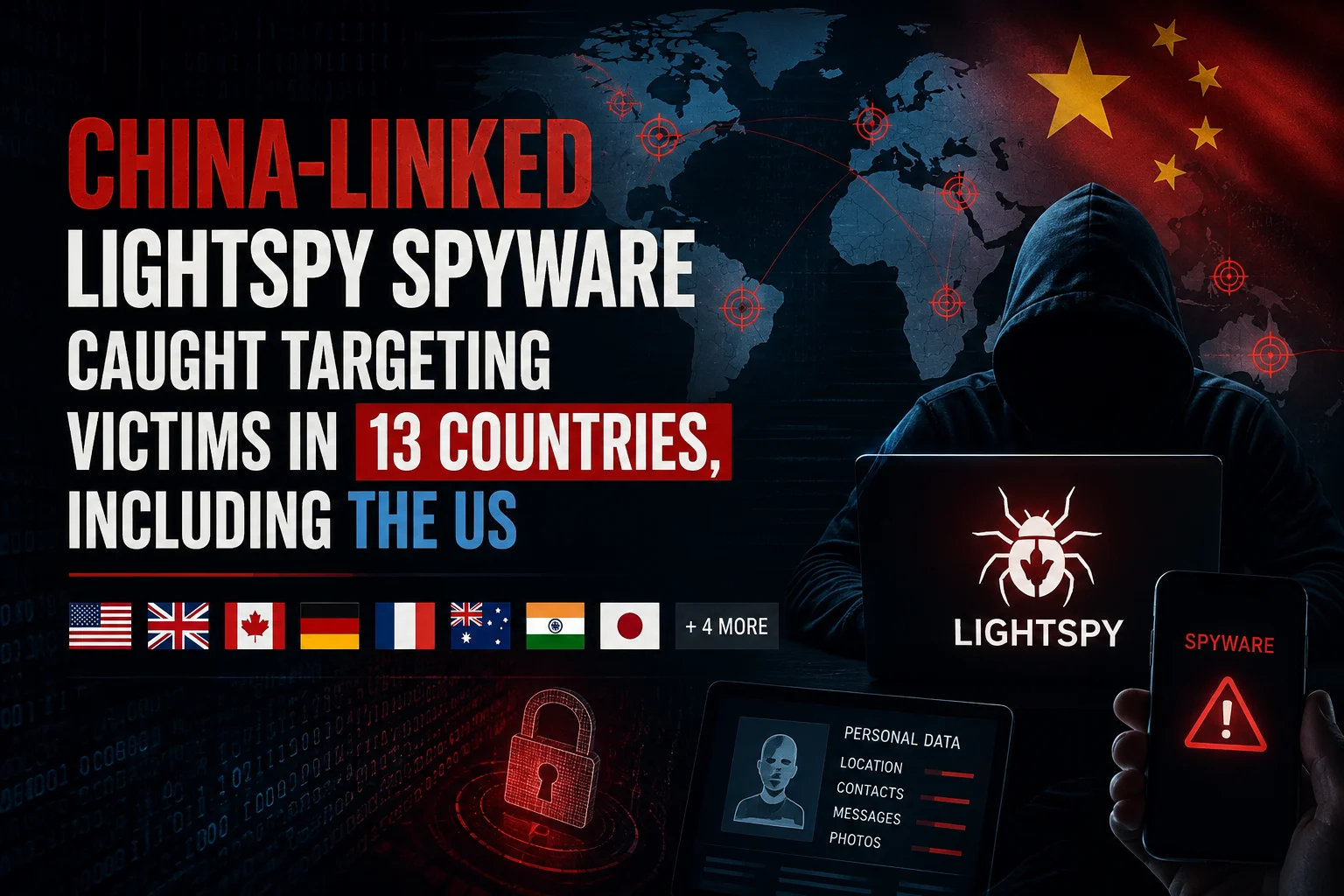
The Commercialization of Cyber Espionage: LightSpy Spyware Targets Victims in 13 Countries
The landscape of digital surveillance is undergoing a troubling transformation. What was once the domain of nation states is rapidly becoming a commercial enterprise, as evidenced by the latest findings on the China linked LightSpy spyware. Security researchers at Arctic Wolf have uncovered that this sophisticated malware has expanded its reach to victims in over a dozen countries, including the United States and several European nations, and has evolved into a commercially available platform.
From State Tool to Commercial Product
First discovered in 2018 and previously attributed to Chinese state backed hackers, LightSpy has undergone a significant evolution. According to the new research, it has transformed into a commercial spyware platform operated by a single threat actor. This operator now caters to a broad clientele, including governments, enterprises, and militaries, offering custom branding, billing, and even demonstrations to advertise the product to prospective customers.
This shift underscores a worrying trend. The use of powerful surveillance technology is no longer confined to the intelligence agencies of major powers. It is proliferating into the private industry, making sophisticated cyber espionage tools accessible to a wider range of actors with varying motives and resources.
Unprecedented Capabilities and Reach
LightSpy is not a simple piece of malware. It is a modular platform designed to attack a multitude of different devices. This includes smartphones, Apple devices, Linux servers, and Windows PCs. The researchers identified new functionality that significantly expands its destructive potential. Beyond stealing sensitive information, the spyware is now capable of remotely wiping and destroying data on a compromised device, effectively bricking it.
The platform’s data theft capabilities are extensive. It can steal precise location data, chat messages, screen recordings, and stored passwords, providing the operator with a comprehensive view of the target’s digital life.
The geographical scope of the operation is also vast. The researchers identified a network of at least 117 servers operating in several countries around the world. More concerningly, LightSpy has now been found infecting routers, a new development that gives the attackers visibility and access to every other device on the same network. Some of these compromised routers are associated with NATO member countries, raising significant geopolitical and security concerns.
A Clue Left Behind
The investigation into LightSpy’s operators yielded a remarkably mundane yet revealing piece of evidence. The researchers were able to link the latest activity to a Chinese contractor after one of the spyware’s operators used the LightSpy administrator’s panel to place an order with Kentucky Fried Chicken. In doing so, he used his real name and office address, providing a tangible clue that connected the sophisticated cyber operation to a physical individual and location.
This small oversight highlights a common vulnerability in even the most secretive operations: human error.
Implications for Global Security
The case of LightSpy serves as a stark reminder of the evolving nature of cyber threats. The commercialization of spyware means that the barrier to entry for conducting sophisticated cyber espionage is lowering. Governments, corporations, and even individuals are at risk from tools that were once the exclusive preserve of a few highly resourced nations.
The ability to target routers and wipe devices adds a destructive dimension that can cripple critical infrastructure and private networks. As this technology continues to proliferate, the challenge for cybersecurity professionals and policymakers will be to adapt defenses and regulations to counter a threat that is increasingly decentralized and commercially driven.
Drop a comment below or reach out on the socials.
TechTrib.com is a leading technology news platform providing comprehensive coverage and analysis of tech news, cybersecurity, artificial intelligence, and emerging technology. Visit techtrib.com.
Contact Information: Email: [email protected] or for adverts placement [email protected]
About The Author
