

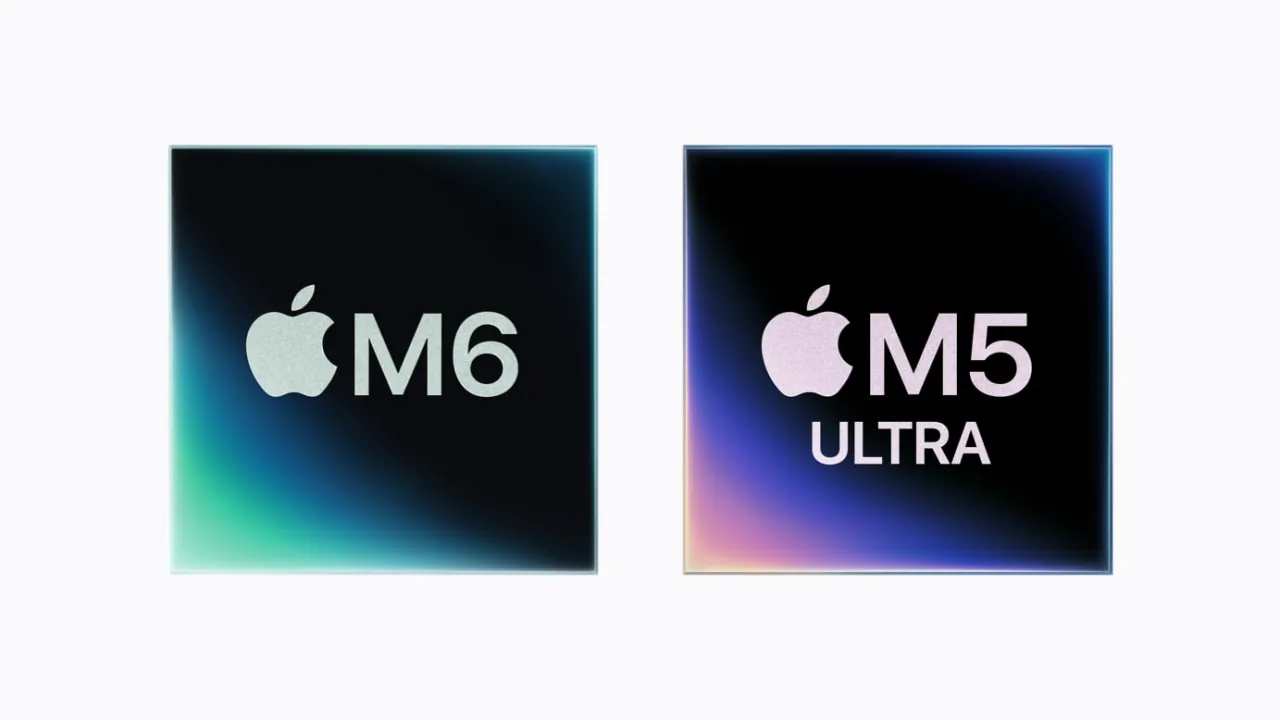
Apple Unleashes Its “Most Powerful Chip Ever” with M5 Ultra and M6
Apple has just raised the bar for desktop computing performance, announcing two new processors the M5 Ultra and M6 that power its refreshed Mac Mini and Mac Studio models. These chips represent a significant leap forward, with a particular focus on handling the increasingly demanding landscape of artificial intelligence.
The M5 Ultra: A Beast for AI and Professional Workloads
The headline-grabber is the M5 Ultra, which Apple touts as its “most powerful chip ever.” This new processor is an engineering marvel, fusing two dual-die M5 Max chips to create Apple’s first quad-die chip. The result is a powerhouse designed to tackle the most compute-intensive tasks.
Key specifications of the M5 Ultra include:
- An up-to-36-core CPU
- An up-to-80-core GPU
- 1.2 TB/s of unified memory bandwidth, a 50% increase over the previous M3 Ultra
This level of performance is targeted at professionals working in fields like complex 3D rendering, visual effects, and running frontier AI models. However, its power will undoubtedly attract hobbyist AI developers as well, making the new Mac Studio with M5 Ultra a compelling option for those who need serious computational muscle on their desks.
The M6: Cutting-Edge Efficiency for Everyday Users
While the M5 Ultra dominates the performance headlines, Apple also introduced the M6 chip, designed with a broader user base in mind. The M6 is built using the cutting-edge 2 nm process, offering significant improvements in energy efficiency and performance.
The M6 features:
- A new 12-core CPU complex, adding two more cores than the M5
- A 30% increase in peak GPU compute for AI compared to the M5
- A Dual 16-core Neural Engine and increased unified memory bandwidth
This combination allows for faster prompt processing when using on-device large language models (LLMs), making AI tasks feel snappier and more responsive.
Apple’s Strategic AI Push
The introduction of these chips highlights Apple’s strategic focus on on-device AI processing. This approach offers significant advantages in privacy and security compared to cloud-based AI, as data never leaves the user’s device. It’s a space where Apple can leverage its ecosystem and hardware-software integration to stand out.
Developers can now run and fine-tune large AI models locally on their Macs. Apple’s developer tools automatically optimize performance across the CPU, GPU, and Neural Engine. This allows developers to use Apple Foundation Models, App Intents for Apple Intelligence features, or their own proprietary AI models entirely on device. While Apple may have trailed in creating its own proprietary AI model (with the Siri upgrade reportedly using Google’s Gemini), its strength lies in providing a secure, controlled environment for developers to build and run powerful AI tools.
Availability and Pricing
The new Mac Mini devices, powered by these chips, are available for preorder now starting at $899 and are set to ship after September 22. With the combination of the M5 Ultra’s raw power and the M6’s efficient performance, Apple is positioning its desktop lineup to be a major force in the next generation of computing, particularly for AI development and deployment.
TechTrib.com is a leading technology news platform providing comprehensive coverage and analysis of tech news, cybersecurity, artificial intelligence, and emerging technology. Visit techtrib.com.
Contact Information: Email: [email protected] or for adverts placement [email protected]
About The Author
