

Thea Energy Secures $20M Federal Grant to Revolutionize Stellarator Magnet Manufacturing
The Department of Energy award will help the fusion startup develop cost-effective, modular magnets for its innovative stellarator reactor design.
Thea Energy, a well-funded fusion power startup, has received a significant boost from the U.S. Department of Energy. The company announced on July 27, 2026, that it has been awarded a $20 million grant from the Advanced Research Projects Agency-Energy (ARPA-E) to advance the manufacturing of its specialized high-temperature superconducting (HTS) magnets.
This funding is a critical step for the hard-tech sector, where manufacturing complex components often presents a major financial hurdle. Thea Energy plans to use the grant to develop and scale production of its modular HTS magnets, which are essential for its unique approach to magnetic confinement fusion.
The Challenge of Stellarator Magnets
Thea’s reactor design is based on a stellarator, a type of fusion device that twists plasma into a complex, 3D shape to confine it more effectively for sustained fusion reactions. While stellarators offer significant advantages in plasma stability, they traditionally face a major engineering challenge: the magnets that create the confining magnetic field must be custom-built to mirror the reactor’s twisted geometry, making them incredibly expensive to produce.
Thea Energy is tackling this cost issue with an innovative approach. Instead of creating dozens of uniquely shaped magnets, the company uses a simplified, modular system:
Large Magnets: The 12 primary magnets are built from just four different templates.
Small Magnets: The more than 300 smaller magnets used for fine-tuning the plasma are all identical.
This design philosophy dramatically reduces manufacturing complexity and cost.
Software-Driven Precision
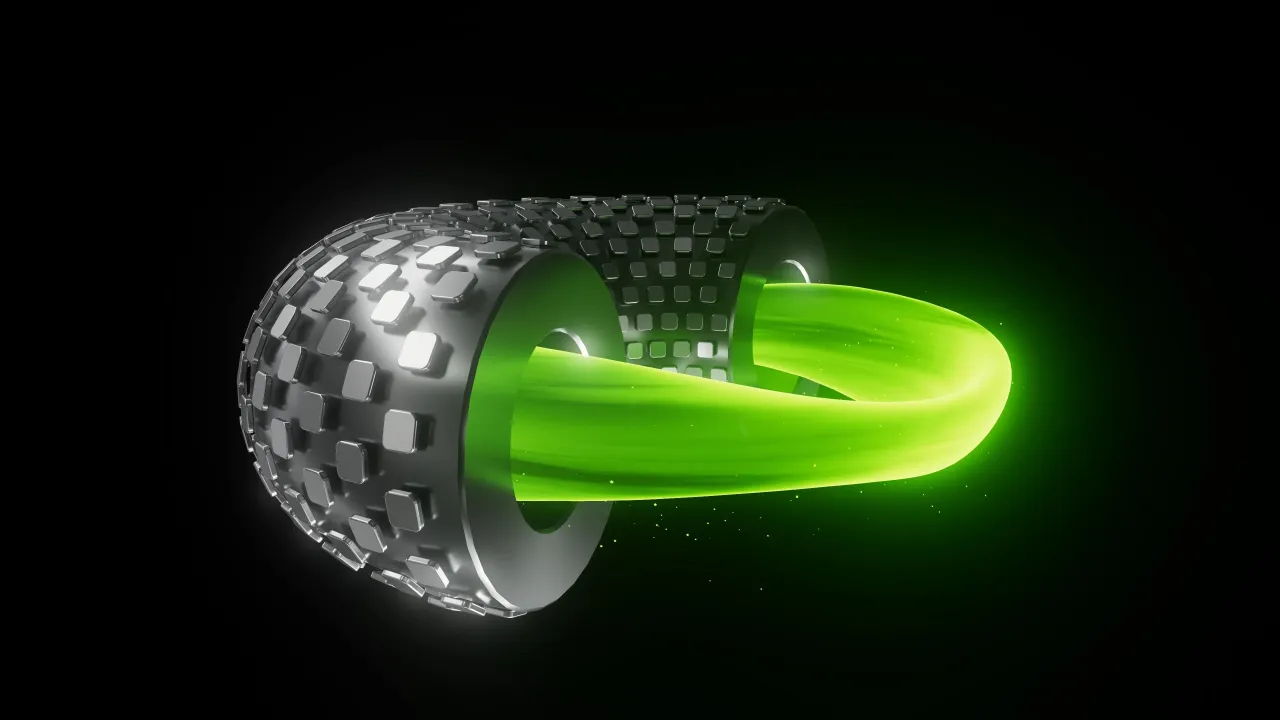
Thea’s system further reduces costs by using software to control the array of identical smaller magnets, which are arranged around the reactor’s periphery much like pixels on a display screen.
This approach allows for more forgiving construction tolerances because the software can compensate for minor physical imperfections. By relying on smart control systems rather than ultra-precise, one-off manufacturing, Thea aims to lower the overall cost and speed up the development of commercial fusion power.
Building on Strong Momentum
The $20 million federal grant adds to Thea Energy’s already impressive financial backing. The company raised a **$100 million** funding round in May 2026, following a $20 million Series A in 2024. This places Thea among the best-funded fusion startups in the industry.
Like many of its peers, Thea Energy has set its sights on a long-term goal, with plans to build a commercial-scale fusion power plant by the mid-2040s. This new funding for magnet manufacturing is a pivotal step in turning that vision into a reality, helping to solve one of the most persistent engineering challenges in fusion energy.
TechTrib.com is a leading technology news platform providing comprehensive coverage and analysis of tech news, cybersecurity, artificial intelligence, and emerging technology. Visit http://techtrib.com.
Contact Information: Email: news@techtrib.com or for adverts placement adverts@techtrib.com
About The Author
