

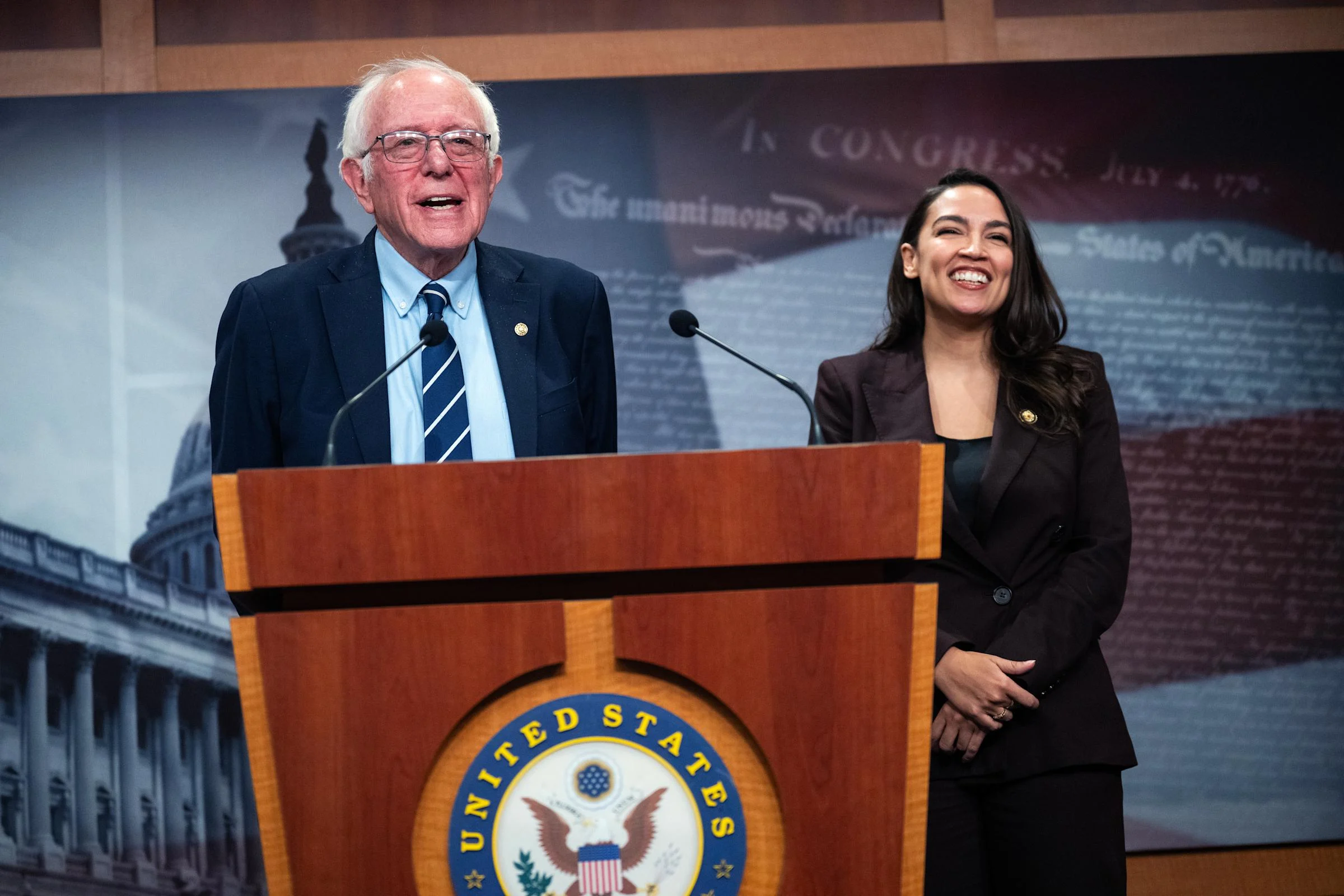
Image Credit: Tasos Katopodis via Getty Images
Why Sanders and AOC Are Pushing This Bill
The legislation is rooted in a confluence of concerns that have been building for years but have reached a boiling point in 2026:
- Energy Consumption: AI data centers are now consuming electricity at a rate that rivals entire nations. The rapid buildout of AI infrastructure driven by companies like NVIDIA, Microsoft, Google, and Amazon has placed enormous strain on the power grid, driving up electricity prices for ordinary consumers and businesses.
- Water Usage: Large-scale data centers require massive amounts of water for cooling, raising concerns about water scarcity in drought-prone regions where many facilities are being built.
- Environmental Justice: Many new data centers are being sited in lower-income communities and rural areas, where residents have less political power to resist their construction despite bearing the brunt of noise, heat, and infrastructure impacts.
- Labor Displacement: Sanders and AOC have been vocal about AI’s potential to eliminate millions of jobs, and the moratorium is framed partly as a pause to allow society to assess and prepare for AI’s economic disruption before further accelerating it.
What the Bill Would Actually Do
According to the press conference, the Artificial Intelligence Data Center Moratorium Act would:
- Impose an immediate moratorium on permits for new AI data center construction
- Require a comprehensive federal study of AI’s energy, water, and environmental impacts
- Mandate that existing data centers meet new energy efficiency and renewable energy standards within 18 months
- Establish a new federal oversight body to review and approve future AI infrastructure projects based on environmental and social impact criteria
Industry Reaction: Swift and Fierce
The tech industry’s response was immediate and unequivocal. Major AI companies, cloud providers, and semiconductor firms issued statements warning that the moratorium would cripple American AI competitiveness at a critical moment when China is aggressively expanding its own AI infrastructure.
NVIDIA, which has been partnering with energy companies to build next-generation “AI factories,” called the proposal “economically devastating and strategically reckless.” Microsoft and Google warned that a construction freeze would force them to shift data center investments overseas, potentially to countries with fewer environmental protections the opposite of the bill’s stated goals.
Venture capital firms and AI startups also pushed back hard, arguing that a moratorium would freeze innovation at exactly the moment when American AI leadership is most needed.
The Political Calculus
The bill faces long odds in the current Congress, where the tech industry wields significant lobbying power. However, Sanders and AOC are clearly playing a longer game using the proposal to shift the Overton window on AI regulation, build a coalition of environmental, labor, and consumer advocacy groups, and force a national conversation about who bears the costs of the AI boom.
The timing is also notable: the bill arrives just days after Jensen Huang declared AGI has been achieved, and as NVIDIA and its partners announce plans for massive new AI infrastructure investments. The contrast between Big Tech’s accelerationist vision and the progressive moratorium proposal captures the central tension of the AI age.
What This Means for the Future of AI Policy
Even if the moratorium bill fails to pass, it signals that AI infrastructure is now firmly on the political agenda. Expect to see more legislation targeting data center energy use, water consumption, and siting decisions in the months ahead. The era of AI infrastructure expanding without political friction is over.
For quality tech news, professional analysis, insights, and the latest updates on technology, follow TechTrib.com. Stay connected and join our fast-growing community.
TechTrib.com is a leading technology news platform providing comprehensive coverage and analysis of tech news, cybersecurity, artificial intelligence, and emerging technology. Visit techtrib.com.
Contact Information: Email: news@techtrib.com or for adverts placement adverts@techtrib.com
About The Author
