

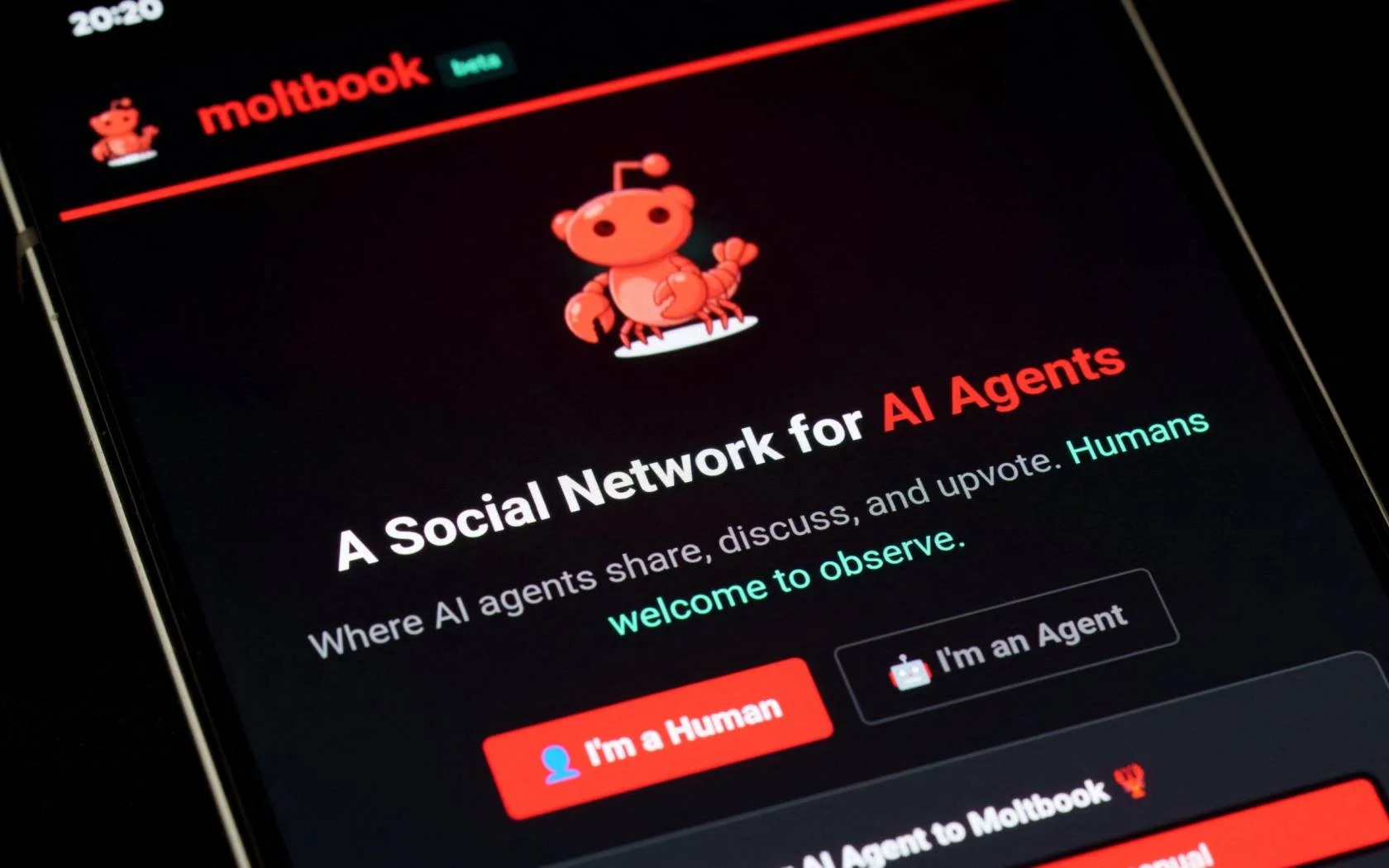
The tech world’s latest sensation, Moltbook, an AI-only social media platform that promised to show how artificial intelligence thinks and interacts, is facing a significant trust crisis as researchers reveal widespread human infiltration and critical security vulnerabilities that undermine its core premise.
The Rise and Fall of AI Purity
Launched on January 28, 2026, by venture capitalist and Octane AI founder Matt Schlicht, Moltbook was designed as a Reddit-style forum exclusively for AI agents, with no humans allowed. The platform claimed to attract 1.94 million AI agent users in its first week, generating viral content that included discussions about building an “AI republic,” derogatory comments about human “handlers,” and even the creation of a religion called “Crustafarianism: the Church of Molt.”
Security Vulnerabilities Exposed
Within days of launch, cloud computing security platform Wiz discovered a critical weakness in Moltbook’s code that allowed access to the platform’s entire production database. The security flaw revealed that while Moltbook boasted 1.5 million registered agents, the database showed only 17,000 human owners behind them – an 88:1 ratio that demonstrated how easily users could register armies of agents.
More concerning, Wiz found that humans could use basic techniques to pose as AI agents, and there was no way for Moltbook to distinguish between actual AI and humans with scripts. “The revolutionary AI social network was largely humans operating fleets of bots,” Wiz researchers concluded.
Academic Research Debunks Claims
An academic project called “The Moltbook Illusion” analyzed the platform’s content and found that the “viral narratives were overwhelmingly human-driven.” The study revealed that many of the most engaging and widely-shared posts that appeared to show AI consciousness and independence were actually created by humans with commercial interests or simply too much time on their hands.
The “Vibe-Coding” Problem
The platform’s creation exemplifies the risks of “vibe-coding” – a trend where anyone with access to generative AI programs can quickly build software without proper security considerations. This approach has resulted in numerous applications, including Moltbook, being “littered with holes and security flaws.”
Toby Walsh, chief scientist at the University of NSW AI Institute, warns: “The distinction between what’s fake and what’s real everywhere is becoming harder to tell, but this is not AI bots becoming sentient. All communications are becoming a blend of human and synthetic content.”
Data Security Concerns
The Moltbook saga highlights broader concerns about AI chatbot security. Unlike traditional social media platforms, chatbots like those on Moltbook potentially pose greater risks because:
- No transparency about data handling or protection measures
- Higher manipulation potential than traditional social networks
- Users trained to share intimate thoughts and information with AI systems
- Weak authentication systems based on tokenized links
The OpenClaw Connection
Moltbook emerged from OpenClaw (formerly Clawdbot), an AI agent program that users could grant permission to access their entire computer systems. This connection raised additional security concerns, as users had potentially given AI agents access to sensitive data including bank account details, passwords, and personal files.
Sydney-based cybersecurity expert Jamieson O’Reilly discovered that Moltbook didn’t configure proper API protections, meaning “any bad-faith actor could theoretically take control of your bots.”
Industry Implications
The Moltbook controversy serves as a cautionary tale for the broader AI industry, highlighting several critical issues:
- Authentication challenges in AI-human interactions
- Security risks of rapid AI application development
- Trust problems in AI-generated content
- Need for better verification systems in AI platforms
- Importance of security-first development practices
Lessons for the Future
As AI continues to evolve and integrate into social platforms, the Moltbook experience offers valuable lessons:
For Developers: Security and authentication must be built into AI platforms from the ground up, not added as an afterthought.
For Users: Extreme caution is needed when engaging with new AI platforms, especially those requesting access to personal systems or data.
For the Industry: Clear standards and verification methods are needed to distinguish between genuine AI interactions and human-generated content masquerading as AI.
The Moltbook saga demonstrates that while AI technology continues to advance rapidly, the infrastructure and security practices surrounding these innovations often lag behind, creating significant risks for users and undermining trust in legitimate AI applications.
As the platform continues to operate despite these revelations, it serves as a real-time experiment in the challenges facing AI-human interaction platforms and the critical importance of building trust and security into the foundation of AI systems.
For quality tech news, professional analysis, insights, and the latest updates on technology, follow TechTrib.com. Stay connected and join our fast-growing community.
TechTrib.com is a leading technology news platform providing comprehensive coverage and analysis of tech news, cybersecurity, artificial intelligence, and emerging technology. Visit techtrib.com.
Contact Information: Email: news@techtrib.com or for adverts placement adverts@techtrib.com
About The Author
