

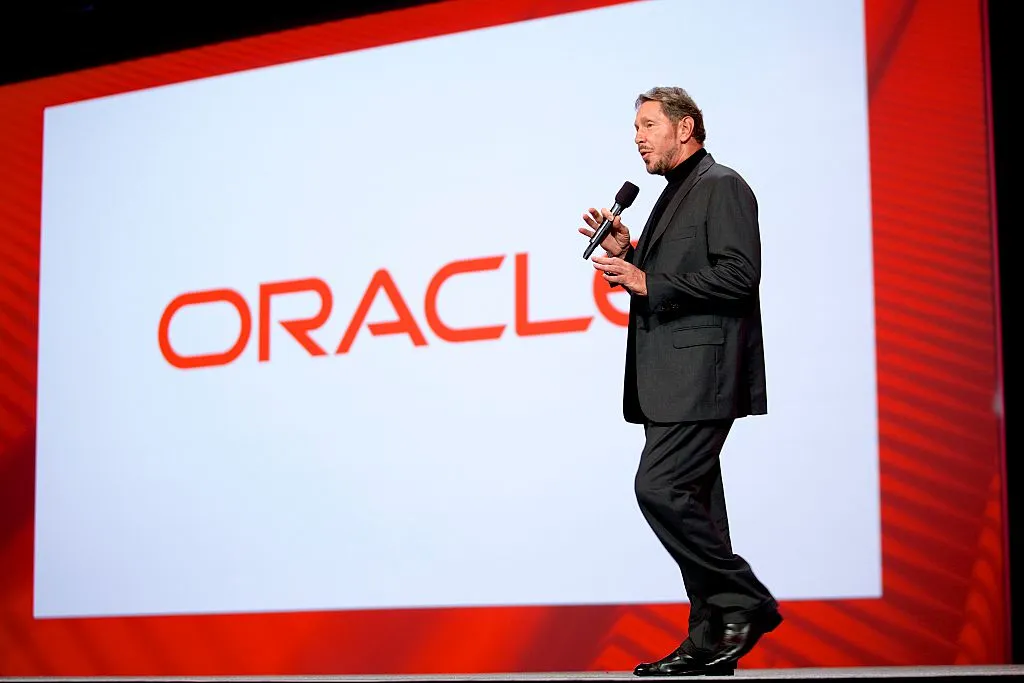
The Signal in the Silence: Why Larry Ellison’s Canceled $7.5 Billion Stock Sale Speaks Volumes
In the high-stakes world of Silicon Valley, what isn’t said often matters more than what is. This weekend, Oracle Corporation quietly dropped a bombshell that rippled through financial markets: Larry Ellison, the company’s co-founder and executive chairman, has canceled a planned sale of 50 million shares, a transaction valued at approximately $7.5 billion.
According to regulatory filings, the sale was set to proceed, but no Oracle stock was sold. The company’s official statement was terse: Ellison has “no other plans to sell any of his Oracle stock.” No reason was given for the abrupt reversal.
On the surface, this is a simple story of a billionaire changing his mind. But in the context of Oracle’s current trajectory, a year marked by a 22% stock decline, aggressive capital expenditure, and a surprising pivot into the geopolitical fray, Ellison’s decision to hold is a profound strategic signal.
The Context: A Year of Heavy Lifting
To understand the weight of this cancellation, one must look at Oracle’s 2026. The stock is down 22% year to date, a stark contrast to the AI driven rallies seen in other tech giants. The culprit? Oracle is in the midst of a massive, capital intensive transformation.
The company has been spending heavily on data centers, positioning itself as a primary infrastructure backbone for the AI revolution. This is a long term play that requires immense patience from investors. Simultaneously, Oracle recently became a major owner and security partner for TikTok’s U.S. operations, a move that thrusts the enterprise software giant directly into the crosshairs of U.S. China geopolitical tensions.
In this environment, a $7.5 billion stock sale by the founder could have been interpreted as a lack of confidence. It could have signaled that even the man who built the company believed the current valuation was a ceiling, not a floor.
The Psychology of the Non Sale
When a founder cancels a sale, especially one this large, it is rarely about market timing alone. It is a psychological maneuver.
1. The Confidence Signal:
By canceling the sale, Ellison is effectively saying to the market: I believe the current price is undervalued. If he thought Oracle was overvalued or that the AI infrastructure bubble was about to burst, taking $7.5 billion off the table would have been the prudent move. By holding, he is aligning his fate with the company’s long term recovery. He is signaling that the pain of the 22% decline is temporary, and the payoff for the data center bet is still on the horizon.
2. The Control Factor:
Ellison is not just a founder; he is a controlling force. With Oracle’s stock in a slump, a massive sell off by its chairman could trigger a cascade of institutional selling. By canceling the plan, he prevents a liquidity crisis in the stock and maintains a tight grip on the company’s narrative. He is protecting the stock from a self inflicted wound.
3. The Empire Strategy:
The article notes that Ellison has been using his wealth to back his son David’s acquisition of Warner Bros., currently contested in court. While the canceled stock sale might seem unrelated to Hollywood, it is all part of the same ecosystem. Ellison’s personal liquidity is a weapon. By not selling now, he retains a massive reservoir of capital that can be deployed strategically, whether to shore up Oracle, support his son’s media ambitions, or pivot to a new venture, without taking a loss at a low point in the market.
The Deeper Strategic Implications
For investors and analysts, this cancellation demands a reevaluation of Oracle’s near term future.
The AI Infrastructure Bet is Not a Quick Flip:
Ellison’s decision underscores that Oracle’s heavy spending on data centers is a marathon, not a sprint. He is not looking to cash out before the paint dries on these new facilities. He is waiting for the revenue to materialize. This suggests we may see continued volatility in Oracle’s stock as the market grapples with the costs of this buildout, but Ellison is betting on the long game.
The TikTok Factor:
Oracle’s role in TikTok is a double edged sword. It provides a massive, guaranteed stream of cloud revenue and a seat at the table of global tech governance. However, it also invites regulatory scrutiny. By holding his stock, Ellison is signaling that he views the TikTok partnership as a strategic asset, not a liability. He is not running from the political heat; he is leaning into it.
The Succession Question:
At 82, Larry Ellison’s every move is scrutinized for clues about succession and legacy. A $7.5 billion sale could have been interpreted as a step toward estate planning or diversification. By canceling it, he reinforces his role as the ultimate decision maker at Oracle. He is not stepping back; he is doubling down.
The Verdict: A Calculated Hold
Larry Ellison is not a sentimental man. He is a ruthless competitor and a calculated risk taker. His decision to cancel this sale is not an act of nostalgia for Oracle; it is a cold, hard assessment of value.
He is telling the market: The current price is wrong. The future is worth more than the present.
In a year where Oracle has been battered by spending and politics, its founder has just placed the largest bet of all, on himself and his company. For investors, the message is clear: If Larry Ellison isn’t selling, why should you?
TechTrib.com is a leading technology news platform providing comprehensive coverage and analysis of tech news, cybersecurity, artificial intelligence, and emerging technology. Visit techtrib.com.
Contact Information: Email: news@techtrib.com or for adverts placement adverts@techtrib.com
About The Author
