

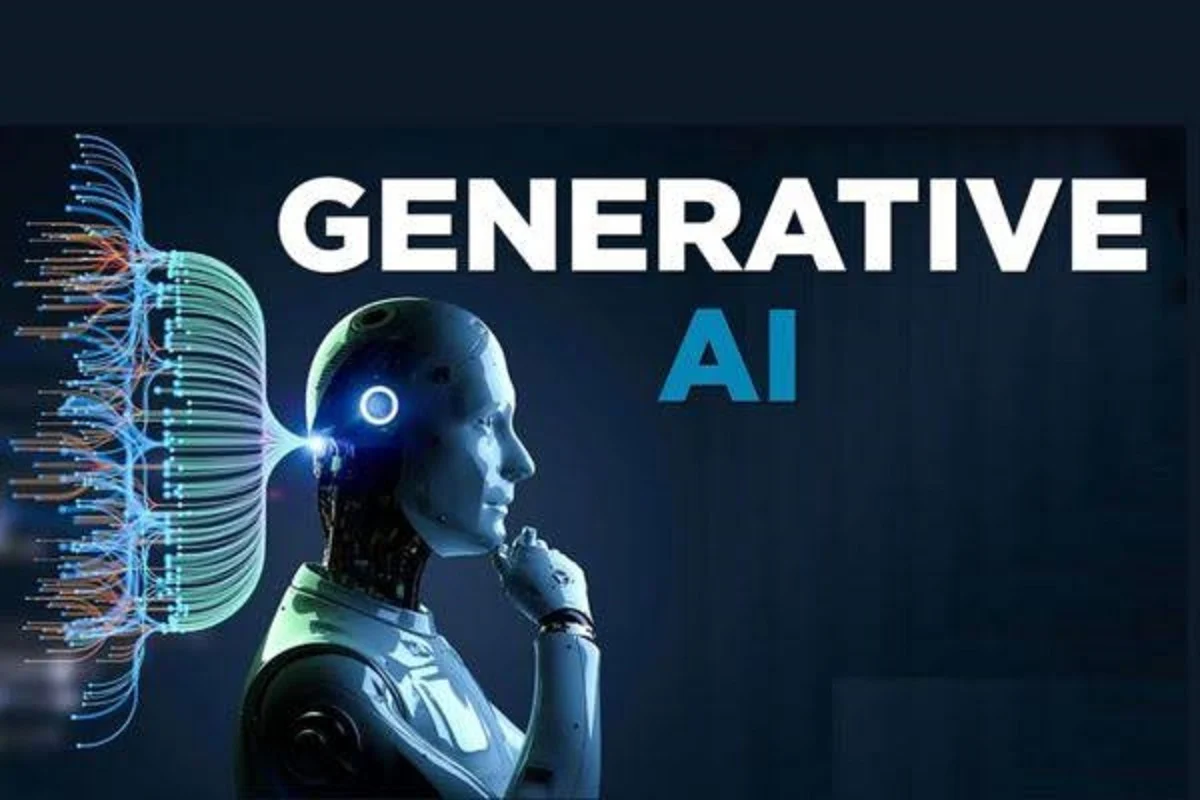
Generative AI 2.0 and AI Evolution: The Next Frontier of Artificial Intelligence
Introduction
Artificial Intelligence has evolved rapidly over the past few years, transforming from a promising innovation into a powerful force shaping industries and everyday life. As we move through 2026, a new era is emerging Generative AI 2.0.
While the first wave of generative AI introduced capabilities such as text generation, image creation, and conversational systems, the next generation is pushing boundaries even further. Generative AI 2.0 represents a shift from systems that simply produce content to systems that can reason, adapt, learn, and operate across multiple forms of information.
This evolution is redefining how businesses operate, how professionals work, and how society interacts with technology.
Understanding the Shift: From Generative AI 1.0 to 2.0
The first generation of generative AI introduced groundbreaking technologies that allowed machines to generate human-like outputs.
Generative AI 1.0 excelled at:
- Creating text and written content
- Producing images and creative assets
- Assisting with coding and automation
- Supporting conversational interactions
Despite these advances, early systems often lacked deeper reasoning, adaptability, and real-world contextual understanding.
Generative AI 2.0 builds upon that foundation by introducing systems capable of:
- Learning and adapting during interactions
- Combining multiple forms of data
- Performing advanced reasoning
- Delivering more reliable and context-aware outputs
This transition marks a move from reactive AI to more intelligent and collaborative systems.
The Core Innovations Behind Generative AI 2.0
Multimodal Intelligence
One of the defining features of Generative AI 2.0 is multimodal capability.
These systems can process and combine:
- Text
- Images
- Audio
- Video
- Structured datasets
Rather than treating information separately, AI can now understand relationships across different formats and deliver more comprehensive insights.
Real-Time Learning and Adaptation
Traditional AI models relied heavily on fixed training data.
Generative AI 2.0 introduces dynamic interaction models that allow systems to:
- Adapt during conversations
- Incorporate feedback immediately
- Improve responses based on user context
This creates more personalized and effective AI experiences.
Advanced Reasoning Capabilities
Modern AI systems are increasingly capable of:
- Multi-step problem solving
- Logical analysis
- Context evaluation
- Decision explanation
Instead of simply predicting outputs, these systems can approach problems with structured reasoning and improved transparency.
Domain-Specific Expertise
Generative AI 2.0 is becoming highly specialized across industries.
Organizations can tailor AI systems for:
- Healthcare
- Finance
- Law
- Engineering
- Education
- Manufacturing
This enables more accurate and industry-relevant outcomes.
Technologies Powering the New Generation of AI
Mixture of Experts (MoE)
Modern AI systems increasingly use specialized expert models working together.
Benefits include:
- Improved efficiency
- Greater scalability
- Better performance across diverse tasks
Retrieval-Augmented Generation (RAG)
RAG enables AI systems to retrieve current information rather than relying only on training data.
This approach improves:
- Accuracy
- Reliability
- Real-time knowledge access
Multimodal Transformers
Advanced architectures now allow AI to interpret and generate across multiple data formats simultaneously, creating richer and more intelligent interactions.
Real World Applications of Generative AI 2.0
Healthcare
AI is helping medical professionals analyze patient data, support diagnosis, accelerate drug discovery, and improve treatment planning.
Financial Services
Financial institutions use AI to:
- Detect fraud
- Assess risks
- Generate investment insights
- Improve decision-making
Software Development
Developers now use AI for:
- Writing code
- Detecting errors
- Improving software architecture
- Accelerating delivery timelines
Creative Industries
AI has become a collaborative creative partner capable of generating ideas, personalizing content, and supporting faster production cycles.
Business Impact and Market Growth
Generative AI adoption is accelerating globally.
Key trends include:
- Rapid enterprise implementation
- Increased investment in AI infrastructure
- Expansion of AI across business functions
- Greater operational efficiency
Organizations embracing AI early are positioning themselves for long-term competitive advantages.
Career Opportunities in the AI Era
The rise of Generative AI 2.0 is creating exciting new career paths.
Emerging roles include:
- Prompt Engineers
- AI Trainers
- AI Researchers
- AI Ethics Specialists
- AI Solution Architects
Professionals with both technical expertise and industry knowledge are expected to remain in high demand.
The Future of Generative AI
Over the coming years, AI is expected to become:
More Specialized
Industry-focused solutions will dominate adoption.
More Integrated
AI will become embedded into everyday business systems.
More Autonomous
Systems will handle increasingly complex tasks with less human intervention.
More Governed
Regulation and ethical frameworks will continue evolving to support responsible development.
Challenges That Must Be Addressed
Despite its enormous potential, Generative AI still faces important concerns:
- Accuracy and misinformation
- Data privacy and security
- Sustainability and energy use
- Workforce transformation
- Ethical governance
Addressing these challenges responsibly will shape the long-term success of AI.
Conclusion
Generative AI 2.0 marks a major leap in the evolution of artificial intelligence. Moving beyond content generation, these systems are becoming more adaptive, intelligent, and capable of supporting complex decision-making.
For organizations, the opportunity lies in strategic adoption and responsible implementation. For professionals, developing AI literacy and practical expertise may become one of the most valuable investments for the future.
The next chapter of AI has already begun and those prepared to understand and use it effectively will help define what comes next.
TechTrib.com is a leading technology news platform providing comprehensive coverage and analysis of tech news, cybersecurity, artificial intelligence, and emerging technology. Visit techtrib.com.
Contact Information: Email: [email protected] or for adverts placement [email protected]
About The Author
