

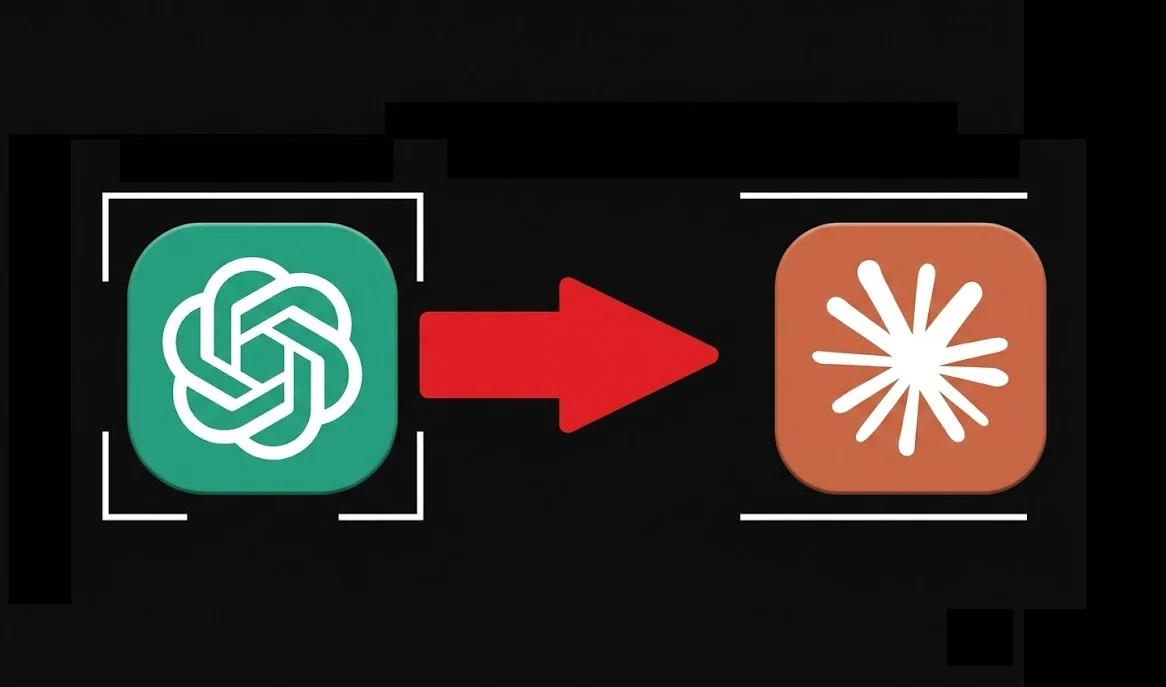
A significant shift is occurring in the artificial intelligence landscape as ChatGPT users increasingly migrate to Anthropic’s Claude, driven by a combination of frustration with ChatGPT’s communication style and controversy surrounding OpenAI’s government partnerships. The trend, documented across multiple platforms and reported by TechCrunch on March 2, 2026, represents a critical moment for OpenAI’s market dominance in the consumer AI space.
The exodus accelerated following two major developments: the persistent complaints about ChatGPT’s overly cautious and patronizing tone, and the announcement of OpenAI’s partnership with the U.S. Department of Defense. Together, these factors have prompted thousands of users to explore alternative AI assistants, with Claude emerging as the clear winner in this competitive shift.
The Catalyst: Multiple Controversies Converge
ChatGPT’s user satisfaction has been declining for months due to the model’s tendency to respond to queries with unnecessary reassurance and emotional support. Users complained that the AI treated straightforward questions as if the person asking were in crisis, leading to responses filled with phrases like “You’re not broken” and “And honestly, that’s okay” even when completely inappropriate.
However, the tone issue alone might not have triggered such a dramatic user migration. The real catalyst came with OpenAI’s announcement of a significant partnership with the Department of Defense. This development raised serious concerns among privacy-conscious users and those opposed to AI being used for military applications.
The combination of these two issues created a perfect storm for OpenAI. Users who were already frustrated with the product suddenly had a compelling reason to switch, and many did so immediately. The timing of these controversies proved particularly damaging to OpenAI’s market position.
Claude’s Competitive Advantages
Anthropic’s Claude has positioned itself as a more straightforward and less patronizing alternative to ChatGPT. The model maintains strong safety features without the condescending tone that frustrated ChatGPT users. Additionally, Anthropic has been more transparent about its values and has explicitly stated that it will not develop AI systems for military applications.
Claude’s approach to AI safety emphasizes constitutional AI principles, which aim to create systems that are both helpful and harmless without resorting to excessive caution or patronizing communication. This philosophy resonates strongly with users who want powerful AI tools without the feeling of being treated like children.
The migration to Claude also reflects broader concerns about corporate values and ethics in the AI industry. Users increasingly consider not just the quality of the product but also the company’s stance on important issues like military applications, data privacy, and responsible AI development.
Market Impact and User Statistics
While exact user numbers are difficult to verify, multiple sources indicate that Claude’s download and usage metrics have surged significantly in recent weeks. App store data and user reports suggest that Claude is now competing directly with ChatGPT for market share in the consumer AI assistant space.
The shift is particularly notable among tech-savvy users and professionals who have the knowledge and resources to switch platforms. These early adopters often influence broader market trends, suggesting that the migration could accelerate in the coming months.
For OpenAI, the user exodus represents a significant threat to its market position. While the company still maintains a large user base, the trend of users actively switching to competitors is a warning sign that cannot be ignored.
How to Make the Switch: A Practical Guide
For users considering switching from ChatGPT to Claude, the process is relatively straightforward. Anthropic offers Claude through multiple platforms, including a web interface, mobile apps, and API access for developers. Users can simply create a new account and begin using Claude immediately.
The transition is particularly easy for users who primarily interact with AI through web browsers or mobile apps. Those who have integrated ChatGPT into their workflows through custom applications or plugins may need to invest more time in migrating to Claude, but the process is generally manageable.
Many users report that the switch is worth the effort, citing Claude’s more natural communication style and the company’s more transparent approach to AI safety and ethics. The learning curve is minimal, as both systems operate on similar principles and use comparable interfaces.
OpenAI’s Response and Future Outlook
OpenAI has acknowledged the user concerns and has begun taking steps to address them. The release of GPT-5.3 Instant, which reduces the “cringe” factor in ChatGPT’s responses, is one such response. However, the company has been less responsive to concerns about its military partnerships, suggesting that this issue may continue to drive users away.
The company’s ability to retain users will depend on its willingness to address both the product quality issues and the ethical concerns that have prompted the migration to Claude. Simply improving the tone of responses may not be sufficient if users remain uncomfortable with OpenAI’s strategic direction.
Industry analysts suggest that the AI market is entering a new phase of competition, where product quality alone is no longer sufficient to maintain market dominance. Companies must also demonstrate strong values alignment with their users and transparency about their partnerships and applications.
Broader Implications for the AI Industry
The migration from ChatGPT to Claude signals a broader shift in how users evaluate AI systems. Beyond raw capability and performance, users are increasingly considering factors like corporate ethics, transparency, and alignment with their personal values.
This trend could reshape the competitive landscape of the AI industry. Companies that prioritize user concerns and maintain transparent communication about their partnerships and applications may gain significant competitive advantages over those that do not.
For Anthropic, the current moment represents an opportunity to solidify its position as a user-friendly alternative to OpenAI. However, the company must continue to deliver on its promises of safety, transparency, and ethical AI development to maintain user trust and loyalty.
What This Means for AI Users
For consumers and professionals using AI assistants, the current competitive dynamics are largely positive. The competition between OpenAI and Anthropic is driving improvements in both product quality and corporate responsibility. Users now have genuine alternatives and can vote with their usage patterns for the companies and products they believe best align with their values.
The migration to Claude also demonstrates that users are willing to switch platforms when they find better alternatives. This creates strong incentives for AI companies to continuously improve their products and maintain ethical standards.
For quality tech news, professional analysis, insights, and the latest updates on technology, follow TechTrib.com. Stay connected and join our fast-growing community.
TechTrib.com is a leading technology news platform providing comprehensive coverage and analysis of tech news, cybersecurity, artificial intelligence, and emerging technology. Visit techtrib.com.
Contact Information: Email: news@techtrib.com or for adverts placement adverts@techtrib.com
About The Author
