

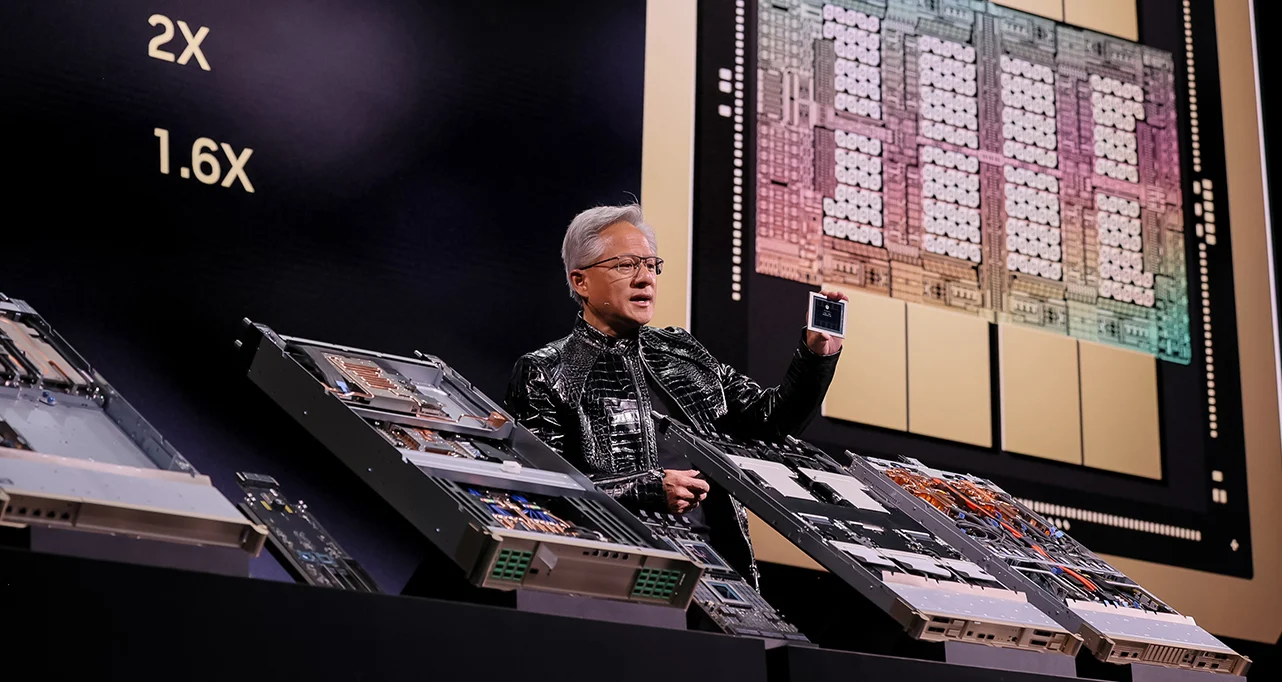
The Consumer Electronics Show 2026 has delivered unprecedented AI announcements that are set to transform the computing landscape. Three industry giants – NVIDIA, AMD, and Intel – have unveiled revolutionary technologies that promise to bring AI capabilities to every device and platform.
NVIDIA’s Rubin Platform: The Next Generation of AI Computing
NVIDIA’s announcement of the Rubin Platform represents a quantum leap in AI processing power. The new DGX Spark system delivers up to 2.6x performance improvement for large language models, with enhanced support for cutting-edge AI frameworks including Lightricks LTX-2 and FLUX. This breakthrough positions NVIDIA at the forefront of the physical AI revolution, enabling more sophisticated autonomous systems and real-world AI applications.
The Rubin Platform’s architecture is specifically designed to handle the computational demands of next-generation AI models, making it a critical component for enterprises looking to deploy advanced AI solutions at scale.
AMD’s Ryzen AI Embedded Series: AI for Everyone
AMD CEO Lisa Su’s announcement of the new Ryzen AI Embedded series marks the company’s aggressive expansion into AI-powered consumer devices. These processors are designed to bring AI capabilities to everyday products, from smart home devices to automotive systems. The “AI Everywhere, For Everyone” initiative demonstrates AMD’s commitment to democratizing AI technology.
The new processors feature enhanced neural processing units (NPUs) that can handle complex AI workloads while maintaining energy efficiency – a crucial factor for battery-powered devices and edge computing applications.
Intel’s Core Ultra Series 3: Bridging Performance and AI
Intel’s Core Ultra Series 3 chips represent the company’s latest effort to integrate AI acceleration directly into consumer processors. These chips are designed to handle both traditional computing tasks and AI workloads seamlessly, making AI-powered applications more accessible to mainstream users.
The integration of dedicated AI processing units within consumer-grade processors signals a fundamental shift in how we interact with technology, enabling real-time AI features in laptops, desktops, and mobile devices.
Market Impact and Industry Implications
These announcements collectively represent a $50+ billion market opportunity in AI hardware over the next three years. The competition between these tech giants is driving rapid innovation and price competition, ultimately benefiting consumers and businesses alike.
Industry analysts predict that these new AI-enabled processors will accelerate the adoption of AI applications across multiple sectors, including healthcare, automotive, finance, and entertainment. The ability to run sophisticated AI models locally on consumer devices also addresses growing concerns about data privacy and cloud dependency.
Looking Ahead: The Physical AI Era
CES 2026 has marked a clear transition from digital AI interfaces to physical AI applications. These new processor architectures enable AI to move beyond chatbots and image generators into robotics, autonomous vehicles, and smart manufacturing systems.
The convergence of powerful AI processing capabilities with edge computing represents a paradigm shift that will define the next decade of technological innovation. As these technologies mature and become more affordable, we can expect to see AI integration in virtually every electronic device.
For quality tech news, professional analysis, insights, and the latest updates on technology, follow TechTrib.com. Stay connected and join our fast-growing community.
TechTrib.com is a leading technology news platform providing comprehensive coverage and analysis of tech news, cybersecurity, artificial intelligence, and emerging technology. Visit techtrib.com.
Contact Information: Email: news@techtrib.com or for adverts placement adverts@techtrib.com
About The Author
