

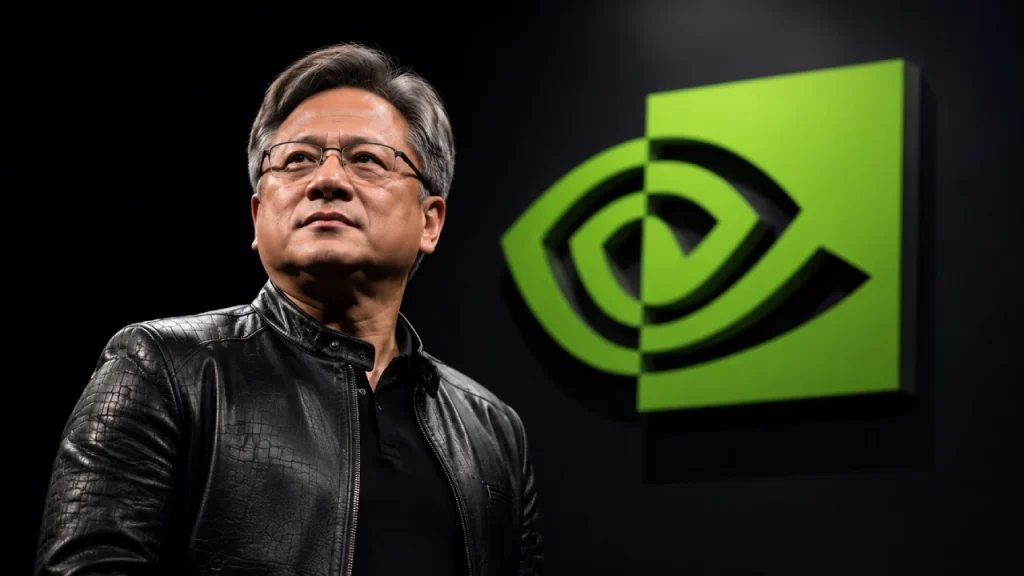
The Cost of the Exception: Jensen Huang, Nvidia’s Code of Conduct, and the Risk to Company Culture
When Jensen Huang addressed Nvidia employees at his first all hands meeting since returning as CEO, the focus was unexpectedly on the company’s code of conduct. Huang openly admitted to violating that code and then made a point of emphasizing that no one, including the CEO, is exempt from it. But in the same breath, he added a caveat. “That does not mean, the moment you violate a code of conduct, we walk you out the door.” According to Huang, “facts, circumstances, a lot of assessments” still matter. In other words, the code applies to everyone, but breaking it does not automatically cost anyone their job, including, apparently, the CEO.
The Cultural Risk of Unpunished Infractions
It is an awkward position for a company whose leader has publicly acknowledged breaking its own rules. While a code of conduct is often viewed as a quasi legal rulebook outlining unacceptable behavior, experts suggest it functions more as a reflection of corporate culture. When an infraction goes unpunished, the primary risk is not legal. It is cultural. Matt Plass, chief market strategy officer at ethics and compliance training firm LRN, recently surveyed more than 2,000 workers across industries for a study on workplace codes of conduct. He identifies the biggest risk as employees becoming ashamed of their workplace. “People coming into the workforce now, ethics is incredibly important to them,” Plass told TechCrunch. “They’re really mindful of the ethical standards of their company. They’re really embarrassed and angry when senior leadership lets them down.”
The “Olympics” Problem
The consequences of violating rules are not always tangible, but they are real. Plass points to a telling example. A company banned corporate travel to cut costs, only for its CEO to appear in a VIP box at the Olympics. “For over a decade afterwards, ‘the Olympics’ was used within that company as an example of the worst thing an employee could do,” Plass explained. “People would say, ‘Yeah, I shouldn’t have done that, but it’s not like I went to the Olympics.'” This illustrates how a single unpunished executive infraction can become a permanent cultural benchmark. It becomes a story employees tell to justify their own lapses or to express their disillusionment.
The Standard Playbook and Why It Does Not Fit Nvidia
Plass notes that companies typically remove an executive after an investigation, then launch a hearts and minds initiative to win back employees, customers, and investors. “In most organizations they make a change at the top based on what’s happened,” he said, “and then they will have a hearts and minds initiative… and say, we get it. We’re sorry. We’ve changed.” That playbook is harder to follow at Nvidia, where Huang departed without a clear succession plan and where serious doubts exist about whether the company could thrive without him. Plass acknowledges there is no easy answer in such cases. “I would draw a distinction there between the kind of companies where the CEO is a kind of godhead figure… where the person and the company are almost impossible to separate,” he said. “There it’s much, much harder to deal with.”
What Is at Stake
In that context, Huang’s stutter step over the code of conduct becomes easier to understand. Judging by the employee campaign for his reinstatement, his return has not created an immediate morale problem. But as the coming months bring more pressure on Huang and his colleagues, particularly in light of congressional testimony and ongoing national security scrutiny, sidestepping the code could end up costing Nvidia something harder to measure than stock price. It could cost the company its employees’ pride.
Conclusion
The reinstatement of Jensen Huang may have calmed investors and rallied the tech industry, but it has introduced a quieter and more insidious challenge inside Nvidia’s own walls. A code of conduct is only as strong as the willingness to enforce it, and when the CEO becomes the exception, the document risks becoming a symbol of convenience rather than conviction. Huang’s acknowledgment of his violation, paired with his insistence that consequences are not automatic, sends a message that employees will interpret in their own way. Some may accept it. Others may remember it. The real test for Nvidia will not be whether its stock rebounds, but whether its people continue to believe in the standards the company claims to uphold. Culture is built over years and eroded in moments. How Nvidia navigates the months ahead will determine which of those truths defines its legacy.
TechTrib.com is a leading technology news platform providing comprehensive coverage and analysis of tech news, cybersecurity, artificial intelligence, and emerging technology. Visit techtrib.com.
Contact Information: Email: [email protected] or for adverts placement [email protected]
About The Author
