

Rivian Expands Volkswagen Partnership to Develop AI Assistant
Rivian and Volkswagen Expand $5.8 Billion Joint Venture to Include AI Assistant Technology
The partnership between Rivian and Volkswagen Group is deepening. The two automakers are expanding their $5.8 billion joint venture to include AI assistant technology, with Rivian now licensing elements of its in-house voice assistant to Volkswagen.
The move, disclosed in Rivian’s third quarter investor presentation released Thursday, marks the first time the joint venture has moved beyond electrical architecture and software into artificial intelligence.
A New Dimension for the Partnership
Rivian did not disclose licensing fees, payment terms, or which Volkswagen vehicles will use the technology. However, the AI assistant, which recently rolled out to Rivian’s own vehicles, could make its Volkswagen debut in the automaker’s low cost EV known as the ID EVERY1. That small four door hatchback is slated to be the first Volkswagen vehicle to use Rivian’s software and electrical architecture under the joint venture established in 2024.
Rivian framed the expansion as a validation of its engineering work. The company described the licensing deal as “a proof point for the extensibility of the platform we’ve built in-house.”
Two Years in the Making
The AI assistant was not an overnight project. Rivian spent two years developing the technology before showing it off last year, and development continued longer than expected. The assistant finally rolled out in May 2026 to the flagship R1S SUV and R1T pickup truck, followed by the new midsize R2 SUV in October.
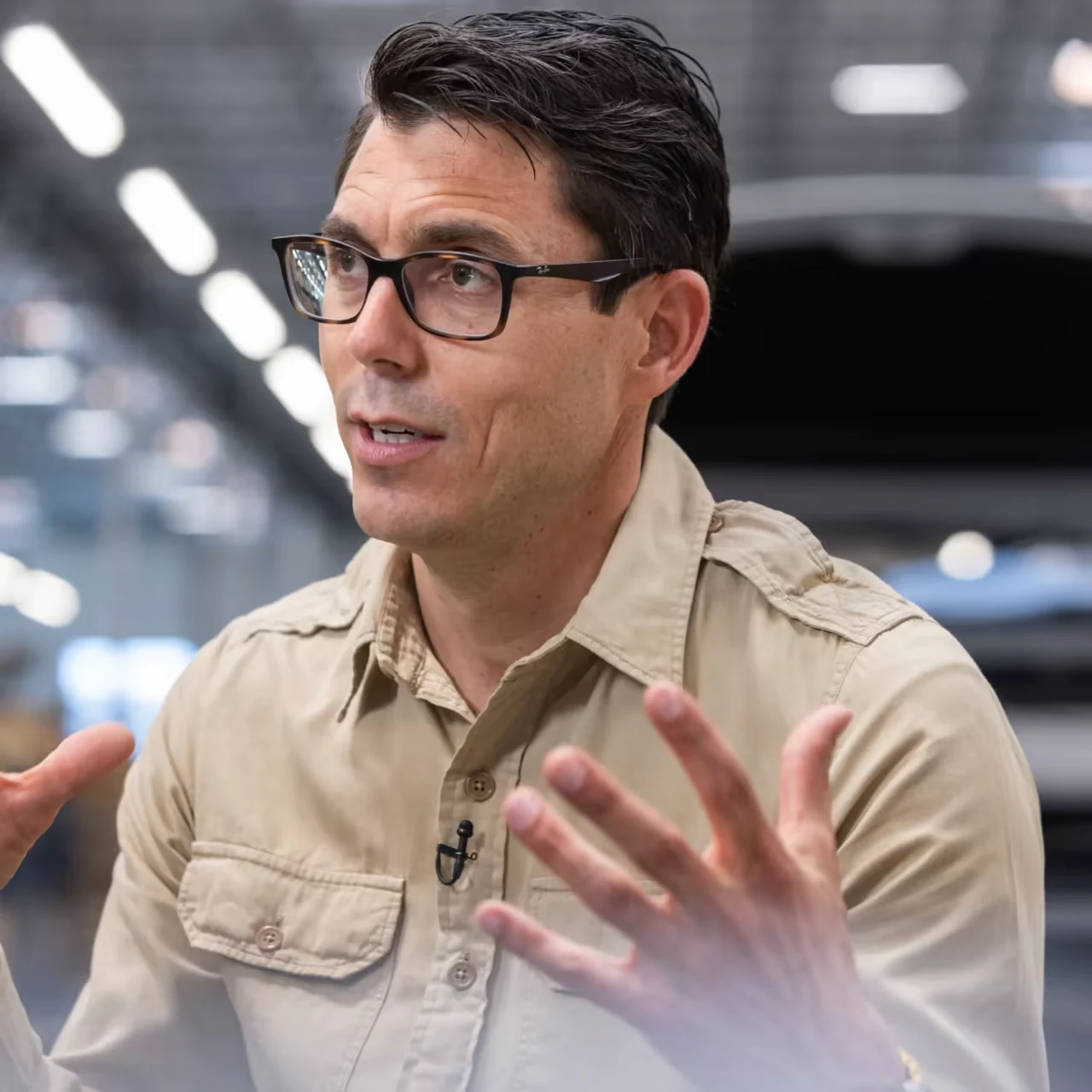
Rivian has ambitious plans for the system, which allows drivers and passengers to interact with the vehicle and control certain functions. Founder and CEO RJ Scaringe told TechCrunch at Disrupt 2026 that the company built its own in-house agentic framework capable of understanding what action a person wants to take when speaking to the vehicle and routing that request to the right part of the car’s software.
That architecture could eventually allow Rivian vehicles to run AI agents created by other companies, including Anthropic.
Vertical Integration as a Selling Point
The AI program fits neatly into Rivian’s broader push toward vertical integration, a strategy the company emphasized repeatedly in its earnings report.
“Our relentless focus on vertical integration remains a core competitive differentiator, allowing Rivian to seamlessly unify our hardware and software architecture to deliver significant value to our customers,” the company noted in its investor presentation.
That approach drove a comprehensive overhaul of the R1T and R1S, touching everything from the battery pack and suspension to the electrical architecture, sensor stack, and software interface. Rivian’s new electrical architecture and compute platform cut wiring and reduced the number of electronic control units controlling the vehicle from 17 down to seven.
Rivian argued this foundation will let it build vehicles capable of handling the computing demands of advanced software and automated driving. Because it controls the entire technology stack, including compute, sensors, displays, lighting, and sound, the company says it can deliver rapid, vehicle wide over the air updates that go well beyond the basics.
Why Volkswagen Is Buying In
That technology caught the attention and the capital of Volkswagen, which has struggled to deliver a modern, software centric vehicle to match competitors like Tesla. The partnership gives Volkswagen access to proven software and electrical architecture without the years of internal development such systems typically require.
The joint venture has expanded before. The companies initially announced a deal valued at up to $5 billion, but within months Volkswagen raised its commitment to as much as $5.8 billion in Rivian by 2027. The initial tie up, formalized through an independent company that began operating in November 2024, focused on bringing Rivian’s electrical architecture and software to Volkswagen’s next generation of vehicles.
Conclusion
The addition of AI assistant technology transforms what began as a hardware and software sharing arrangement into something closer to a full technology partnership. For Rivian, the deal delivers a valuable licensing revenue stream and external validation of a platform built entirely in house. For Volkswagen, it offers a shortcut in the race to build software defined vehicles that can compete with Tesla. As the ID EVERY1 approaches production, the partnership will face its first real test of whether licensed Rivian technology can translate into a compelling mass market EV. If it succeeds, the joint venture could serve as a blueprint for how legacy automakers buy their way into the software era.
TechTrib.com is a leading technology news platform providing comprehensive coverage and analysis of tech news, cybersecurity, artificial intelligence, and emerging technology. Visit techtrib.com.
Contact Information: Email: [email protected] or for adverts placement [email protected]
Related Posts
- Binance pauses withdrawals as hackers suspected of stealing billions in crypto
- Elon Musk is ‘truly a genius,’ says Vladimir Putin
- Amazon’s Cloud Revenue Surges Despite Missing Overall Earnings Expectations
- Apple Unveils New MacBook Pro With Touchscreen Display
- Microsoft Earns $10 Billion in Revenue From OpenAI
