

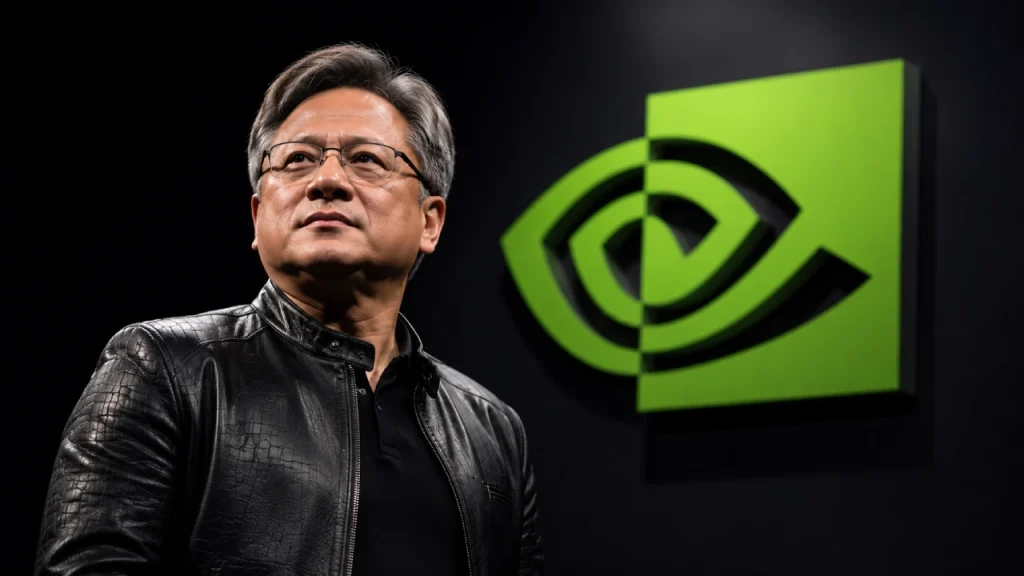
Beyond the Chip: Why Nvidia’s Reported $13 Billion Bet on Hugging Face is a Power Play for AI’s Soul
The AI world is buzzing with a report that could reshape the industry’s landscape: Nvidia is reportedly set to acquire Hugging Face for a staggering $12.9 billion . While the TechCrunch Equity podcast team touched on this news, noting it as a significant development, the scale and implications of this potential deal deserve a much deeper dive. On the surface, it looks like a giant buying a platform. In reality, it’s a sophisticated hedge against the future, a play for developer loyalty, and a move that could redefine the battle between open and closed AI.
The Price of a “Neutral” Hub
For the uninitiated, Hugging Face is often called the “GitHub of AI.” It’s a sprawling, open-source platform where developers share, discover, and deploy machine learning models, datasets, and applications. It has become the de facto town square for the open-source AI community, championing a vision where AI development isn’t controlled by a few powerful companies .
So why would Nvidia, the undisputed king of AI hardware, pay roughly 86 times Hugging Face’s annualized revenue of about $150 million for it? The answer lies not in the startup’s current earnings, but in its strategic position.
Why Nvidia Needs Hugging Face
1. A Hedge Against Its Biggest Customers
Nvidia’s dominance in AI chips is under siege from its own biggest customers. Companies like OpenAI, Google, and Anthropic are developing their own custom silicon to reduce reliance on Nvidia’s high-margin GPUs . As TIME Magazine aptly put it, the Hugging Face deal is “partly a hedge against an emerging threat” . By owning the distribution layer for open models, Nvidia ensures it has a stake in a future where AI development is more decentralized, and where countless smaller players and startups are using its chips to run those models.
2. Owning the Developer Ecosystem
The Equity podcast discussed how robotics startups like Generalist and General Intuition are seeing massive valuations, but the podcast’s real insight was about the importance of developer mindshare. Nvidia’s true “secret sauce” has always been CUDA, its software platform that locks developers into its hardware. Hugging Face provides a similar but more powerful vector: direct access to the millions of developers, researchers, and enterprises that form the core of AI innovation . Jensen Huang isn’t just buying a company; he’s buying a community and a distribution channel. As one analyst noted, the deal gives Nvidia “direct access to the developers, models, datasets and deployment activity driving AI adoption” .
3. Fortifying the Open-Source Strategy
Nvidia has publicly positioned itself as a defender of open-source AI, partly as a counterweight to closed behemoths like OpenAI . As The Next Web points out, owning the main distribution point for open models presents a “fairly complete reversal” of Hugging Face’s mission of neutrality . Hugging Face, after all, had previously rejected a $500 million investment from Nvidia precisely to avoid one single investor having too much influence . This new dynamic has led to “reports have emerged that Nvidia is poised to complete the acquisition,” highlighting the tension between the platform’s open ethos and its new owner’s commercial interests.
The Big Question: Will Neutrality Survive?
This leads to the central question for the AI community: Can Hugging Face remain a neutral marketplace if it’s owned by Nvidia?
The concern is real. If Nvidia controls the Hub, it could subtly optimize popular models to run better on its GPUs, making its hardware the default choice for developers before they even consider alternatives . This could stifle competition from emerging chipmakers and further entrench Nvidia’s dominance. The “open” platform might slowly transform into an “Nvidia-centered distribution channel,” as one analyst warned .
For now, the deal remains a report, albeit a highly credible one. But it signals a pivotal moment. The battle for the future of AI is no longer just about who builds the best chips; it’s about who controls the ecosystem, the developers, and the very definition of “open.”
Conclusion
The reported Nvidia-Hugging Face acquisition is a chess move of epic proportions. It’s a clear signal that the next phase of the AI revolution will be fought not on a single battlefield, but across the entire landscape of hardware, software, and community. By absorbing the community’s central hub, Nvidia aims to secure its future against the giants of today while defining the ecosystem of tomorrow. Whether this is a brilliant strategic victory or the beginning of the end for truly open AI remains to be seen. One thing is certain: the AI world will be watching closely.
What do you think about the reported acquisition? Will it be good or bad for open-source AI? Let us know in the comments below!
TechTrib.com is a leading technology news platform providing comprehensive coverage and analysis of tech news, cybersecurity, artificial intelligence, and emerging technology. Visit techtrib.com.
Contact Information: Email: [email protected] or for adverts placement [email protected]
About The Author
