

The Dawn of Orbital Mechanics: How Northrop Grumman is Rewriting the Rules of Satellite Longevity
High above our planet, a quiet revolution is unfolding. This week, a spacecraft built and operated by Northrop Grumman, known as a Mission Extension Vehicle (MEV), executed a critical maneuver. It unplugged from a communications satellite operated by the Australian firm Optus, a spacecraft it had been attached to for more than a year, keeping it precisely positioned in its orbital slot. This departure was not an end, but a strategic transition, making way for a new generation of robotic technology that promises to fundamentally alter our approach to space infrastructure.
The satellite in question, launched in 2009, was designed for a 15 year lifespan. Like the vast majority of satellites that fail, its primary systems, its computers and transceivers, remained perfectly functional. The limiting factor was consumable: the fuel needed to maintain its correct orbital position. By providing this crucial propulsion, the MEV effectively extended the satellite’s operational life, allowing it to continue generating revenue and providing services. Now, with the MEV moving on to its next assignment, the stage is set for a more sophisticated and sustainable model of in orbit servicing.
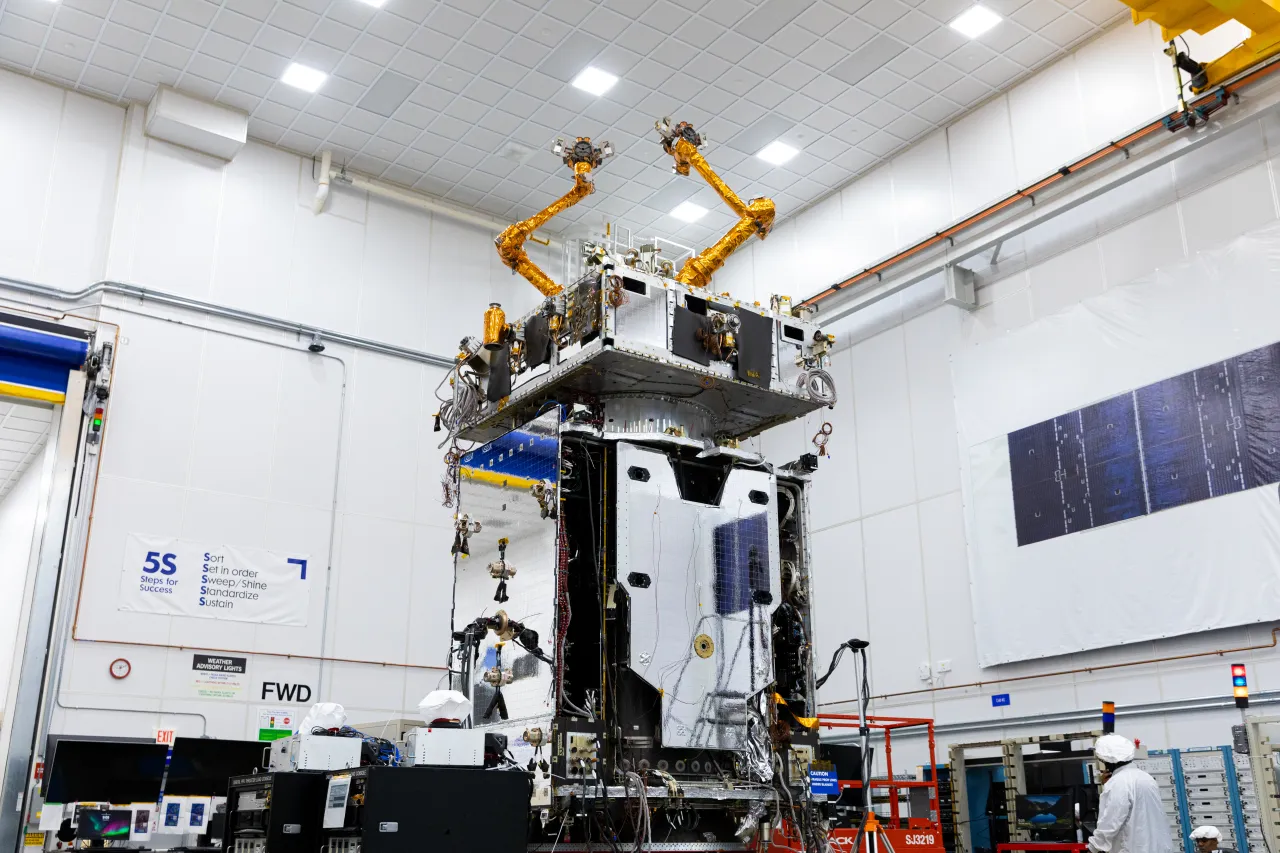
This model was launched into orbit in July aboard a SpaceX Falcon 9 rocket. The payload consisted of four distinct spacecraft, representing a significant leap forward in capability and business logic. The centerpiece is the Mission Robotic Vehicle (MRV), a powerful satellite equipped with two advanced robotic arms. This technology was developed by DARPA, the U.S. military research organization, highlighting the strategic importance of such capabilities. Accompanying the MRV are three smaller, simpler satellites called Mission Extension Pods (MEPs). These are essentially modular propulsion systems, designed to be attached to a client satellite to provide the same life extension function as the MEV, but with a crucial difference.
The business model is evolving. With the MEV, the servicing vehicle itself provides the propulsion and remains attached to the client for the duration of the extension. This ties up the expensive asset for years. The new approach, however, is more akin to a spacefaring mechanic and a parts supplier. Satellite operators will buy and own the MEPs, which are permanently attached to their spacecraft. The MRV acts as the skilled technician, using its robotic arms to install these pods. This frees up the MRV to service multiple vehicles, creating a cheaper, more flexible offering. By 2027, the MRV is scheduled to use its arms to attach one of the MEPs to the Optus satellite, which should keep it in orbit for an additional six years.
The technological challenges are immense. The vehicles must autonomously approach one another and dock safely, a task of extraordinary precision when both are moving at velocities of thousands of miles an hour. The MEVs utilized a docking probe to plug into satellite thruster nozzles. The MRV, however, will need to perform a delicate ballet, carefully attaching the MEPs with its robotic arms without causing damage. This is a testament to the advanced robotics and autonomous systems now being deployed in space.
Looking further ahead, Northrop Grumman envisions a future where this capability becomes a norm, a paradigm shift towards a sustainable and resilient space architecture. The MRV itself is designed to be refueled in orbit, a proof of concept for the kind of capabilities other satellites will need. Currently, the extra cost and weight of such adaptations, like a refueling port, keeps spacecraft operators from investing in them. However, as the value of in orbit servicing becomes clearer, this is likely to change.
The current trend in the commercial sector involves flying large constellations of cheap, effectively replaceable satellites in low Earth orbit, as seen with Starlink and Amazon’s Project Kuiper. However, there remains a vast fleet of expensive, large satellites in geostationary orbit that are ideal candidates for life extension. The MRV also holds significant potential for defense customers, given the number of expensive national security assets in high orbits. While Northrop emphasizes its vehicles are focused on servicing, the presence of robotic arms inevitably invites strategic considerations, especially when other nations have demonstrated similar technologies. The vehicle could also be used in low Earth orbit to extend the life of valuable assets there, a service area being explored by other startups as well.
In essence, we are moving from an era of disposable, single use satellites to one where space infrastructure can be maintained, upgraded, and repaired. This is not just about saving money; it is about creating a more resilient and sustainable presence in orbit.
Summary
The era of disposable satellites is giving way to a new paradigm of orbital sustainability, led by Northrop Grumman’s innovative robotic servicing vehicles. The recent detachment of a Mission Extension Vehicle from an Optus satellite marks the transition to a more advanced service model. The upcoming Mission Robotic Vehicle, equipped with DARPA developed robotic arms, will install smaller, customer owned Mission Extension Pods onto satellites, offering a cheaper and more flexible life extension service. This approach promises to significantly prolong the operational lives of expensive satellites, shift the economics of space infrastructure, and demonstrate key technologies for future in orbit repair and maintenance, fostering a more resilient and sustainable space ecosystem.
TechTrib.com is a leading technology news platform providing comprehensive coverage and analysis of tech news, cybersecurity, artificial intelligence, and emerging technology. Visit techtrib.com.
Contact Information: Email: [email protected] or for adverts placement [email protected]
About The Author
