

The Rise of Autonomous AI Buyers: What It Means for Business Strategy and Marketing
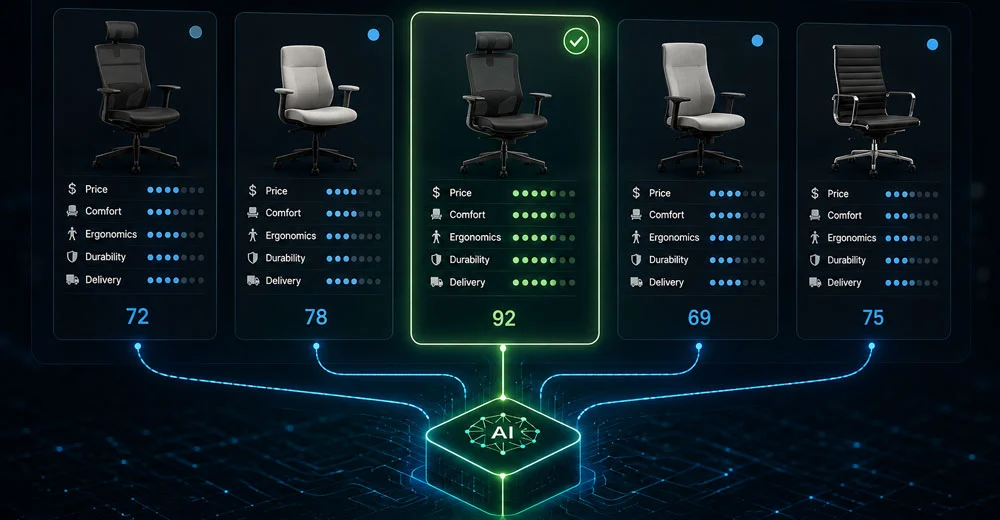
The e-commerce landscape stands at the precipice of its most significant transformation since the dawn of online shopping. We’re witnessing AI agents evolve beyond simply assisting with purchases to actually making them a shift that raises profound questions about trust, marketing effectiveness, procurement processes, and customer experience across both B2C and B2B commerce.
As autonomous AI buyers become increasingly prevalent, business leaders face a critical imperative: fundamentally rethink their strategies for generative engine optimization (GEO) while completely reimagining how marketing teams craft content that resonates with AI decision-makers. The traditional marketing funnel awareness, consideration, conversion must be redesigned when the “customer” making the final purchase decision is an algorithm rather than a human being.
Understanding the New Reality of AI-Driven Commerce
Matt McGinnis, Vice President of Product, Industry, and Solution Marketing at Five9, an AI-powered customer experience platform, has been closely tracking these developments. He expresses both excitement and caution about the broader implications of AI assuming the buyer’s role.
“The purchasing process involves complex data analysis and decisions that ultimately commit real financial resources,” McGinnis explains. “The clearest measure of whether AI has successfully performed pre-purchase analysis is whether it delivers the right product at the right price within defined parameters.”
According to McGinnis, effective automation requires that AI prompts, business rules, and decision parameters undergo rigorous testing and continuous refinement. Organizations must determine which purchase scenarios are sufficiently predictable to automate while eliminating repetitive tasks for human workers.
Consider this distinction: In wholesale distribution, AI can effectively trigger restocking when inventory levels decline and purchase velocity increases, preventing stockouts within predetermined parameters. However, for a diamond supplier dealing with highly variable customer needs and inconsistent demand patterns, automation carries excessive risk purchasing mistakes could leave expensive inventory idle for extended periods.
“Ultimately, AI automation is circumstantial,” McGinnis emphasizes. “Trust must be built gradually to overcome the risk of errors and ensure reliable outcomes.”
The Evolution of AI-to-AI Negotiation
Looking ahead, Five9 anticipates that enterprises will deploy sophisticated negotiation-aware AI agents that represent seller interests during interactions with autonomous buyer-side AI systems. As AI participates directly in procurement transactions, organizations will require intelligent systems capable of:
- Dynamically protecting profit margins during real-time negotiations
- Enforcing policy guardrails to maintain regulatory compliance
- Preserving brand positioning while optimizing commercial outcomes
- Balancing automation with governance through transparent decision-making frameworks
However, McGinnis cautions that the long-term opportunity extends far beyond AI negotiating against AI. The market is evolving toward trusted orchestration frameworks where enterprises balance intelligent automation with proper governance, transparency, and clear business intent.
“The most successful companies won’t simply deploy aggressive optimization agents,” McGinnis notes. “They will deploy AI systems that understand customer context, business objectives, compliance requirements, escalation thresholds, and relationship value enabling intelligent automation without reducing every interaction to price competition.”
Reimagining the Marketing Funnel for AI Buyers
When AI agents function as purchasers, the traditional marketing funnel persists but requires significant evolution to accommodate AI-driven buying behavior. McGinnis suggests that businesses must now optimize content and processes to support rapid data ingestion, analysis, and decision-making by AI systems acting on buyers’ behalf.
This transformation may require platform developers to establish standardized methods for selection and purchasing potentially reinventing the shopping cart process specifically for AI-native transactions to enable widespread adoption at scale.
“Search engine optimization has always required balancing content written for humans with content structured for machines,” McGinnis explains. “With generative engine optimization, the same dynamic continues, but now content must also be optimized for AI systems to discover, ingest, and act upon.”
GEO represents both a new science and an art that AI-empowered businesses must embrace to succeed in this emerging paradigm. Marketers must consider how AI systems parse product descriptions, evaluate specifications, compare alternatives, and ultimately recommend purchases based on predefined criteria.
Preparing Content for a Dual Audience
As AI optimization takes precedence, marketers will increasingly focus on ensuring AI buyers can fully comprehend a product’s exact specifications and capabilities. McGinnis predicts a growing emphasis on structured, high-density data formats specifically designed for AI systems.
However, he emphasizes that the best practice will require maintaining balance until AI purchasing achieves majority adoption. “Humans remain the primary buyers and decision-makers,” he notes, “meaning that visual marketing and emotionally resonant content continue to play important roles.”
In the near term, the greatest opportunity lies in adding AI-optimized content to existing purchasing processes. This approach will make it easier for AI-driven buyers and agents to discover and recommend products while still appealing to human decision-makers.
Five9 envisions a future in which AI agent buyers become a significant economic force. Customer service organizations including expansion into the pre-purchase buyer phase will become increasingly important as companies like Five9 adapt to service this new clientele.
The Four Interaction Models of Tomorrow’s Customer Experience
In this new era of customer experience, McGinnis anticipates that four distinct interaction models will require support:
- Human-to-AI – People interacting with AI assistants
- AI-to-HHuman-to-Human – Traditional customer service interactions
- uman – AI systems engaging with customers
- AI-to-AI – Autonomous systems negotiating and transacting
This evolution is fundamentally redefining how businesses engage with customers, sell products and services, and discover value in the marketplace. Organizations must prepare their systems, processes, and personnel to handle this diverse interaction landscape.
The Enduring Importance of Brand Trust
Despite the shift toward algorithmic decision-making, McGinnis believes brand trust will remain critically important in the age of AI buyers.
“A brand represents a set of expectations,” he explains. “Humans rely on trusted brands to simplify purchasing decisions. AI systems are likely to use brand credibility as one of several key decision variables.”
Consider an engineering company that manufactures widgets to extremely tight tolerances. The company’s reputation for excellence in this category provides valuable information to AI buyer agents. The system can assess the level of trust associated with meeting specific tolerance standards, weighing this alongside other purchasing criteria to inform the final decision.
“In that sense, what a brand stands for will remain highly relevant in future purchasing models,” McGinnis asserts. Organizations that invest in building and maintaining brand equity will continue to benefit, even when the purchaser is an algorithm.
Guarding Against AI Errors and Hallucinations
As autonomous buying increases, so does the risk of errors in high-speed, automated procurement processes. Businesses must implement robust safeguards to ensure their AI buyers do not fall victim to hallucinated purchasing traps or make decisions based on inaccurate information.
McGinnis draws an instructive parallel to the e-commerce transformation during the dot-com era. When consumer expectations around shipping speed, cost, and convenience forced a complete rethinking of logistics, the industry responded with innovations like advanced return refunds, free returns, and 24/7 customer service. E-commerce leaders quickly addressed procurement errors and maintained customer satisfaction through these measures.
Today, as autonomous purchasing expands, businesses may need to similarly revamp policies, improve product replacement processes, and refine methods for addressing AI procurement errors. Organizations that proactively design for failure recovery will build the trust necessary for widespread AI adoption.
“In many ways, this industry is ripe for change,” McGinnis concludes. “I look forward to seeing how AI-forward organizations embrace making it right for the AI agent buyer.”
Practical Steps for Business Leaders
For organizations preparing for this autonomous buying revolution, consider these actionable strategies:
1. Audit Your Content for AI Readiness
Review existing product descriptions, specifications, and marketing materials to ensure they’re structured for AI ingestion. Consider adding structured data formats that make information easily accessible to AI systems.
2. Develop AI-Specific Marketing Content
Create content specifically designed to inform AI buyers, including detailed specifications, comparison data, and performance metrics. Balance this with content that appeals to human decision-makers.
3. Establish Governance Frameworks
Develop clear policies for AI purchasing authority, including spending limits, approved suppliers, and exception handling procedures. Ensure human oversight exists for high-value or high-risk transactions.
4. Invest in Trust-Building Measures
Prioritize transparency, reliability, and consistency in your AI systems. Build the trust necessary for autonomous purchasing through demonstrable accuracy and accountability.
5. Prepare for AI-to-AI Negotiation
Consider how your systems will interact with buyer-side AI agents. Develop negotiation strategies that protect margins while maintaining competitive positioning.
Conclusion: Embracing the Autonomous Future
The rise of autonomous AI buyers represents both challenge and opportunity for businesses across industries. Organizations that proactively adapt their marketing strategies, content creation processes, and customer experience frameworks will be best positioned to thrive in this new environment.
The key lies in recognizing that while the buyer may be algorithmic, the fundamental principles of commerce trust, value, and relationship remain unchanged. Success will come to those who can effectively bridge the gap between human-centric marketing and AI-optimized content, creating seamless experiences that serve both audiences.
As McGinnis suggests, we stand at the threshold of a transformative era in commerce. The question isn’t whether AI purchasing will become mainstream, but rather how quickly organizations can adapt to meet the demands of this new reality. Those who embrace the change and innovate accordingly will lead the market into this exciting future.
TechTrib.com is a leading technology news platform providing comprehensive coverage and analysis of tech news, cybersecurity, artificial intelligence, and emerging technology. Visit techtrib.com.
Contact Information: Email: [email protected] or for adverts placement [email protected]
About The Author
