

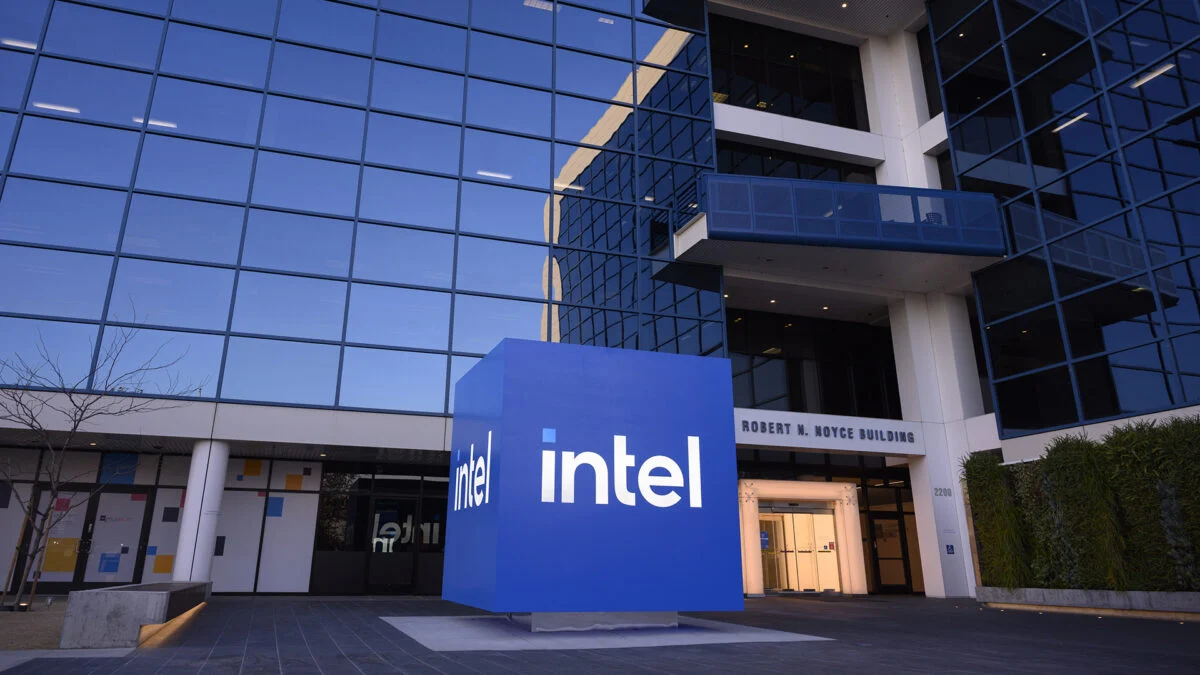
After years of struggling to find its footing in the AI era, Intel has delivered a stunning comeback. On April 24, 2026, Intel’s stock surged more than 25% soaring past its dotcom-era peak from the year 2000 after the chipmaker posted Q1 2026 earnings that crushed Wall Street estimates and issued a bullish revenue outlook driven by surging demand for its central processing units (CPUs) from AI service providers.
What Drove the Surge?
The catalyst is clear: AI agents are changing the chip equation. While Nvidia’s GPUs have dominated the AI training phase, the explosion of AI agentic workloads real-time reasoning, code generation, multi-step task coordination, and search is creating massive new demand for high-performance CPUs. Intel’s latest processors are purpose-built for exactly these workloads, and the market is responding.
Intel CEO Lip-Bu Tan, who took the helm as part of a sweeping revival plan, confirmed that demand for Intel’s AI-focused CPUs was so strong in Q1 that the company sold out of supply. The company’s Q2 revenue guidance came in well above analyst estimates, signaling that this is not a one-quarter blip but the beginning of a sustained growth cycle.
Intel’s Remarkable Turnaround
Intel’s resurgence is all the more remarkable given where the company stood just 18 months ago. The chipmaker had missed the early AI boom entirely, failing to challenge Nvidia’s GPU dominance and losing significant market share in data centers. CEO Tan’s revival plan has included aggressive asset sales, a refocus on manufacturing excellence, and a strategic pivot toward AI-optimized CPU architectures.
The results are now showing up in the numbers. Intel’s Q1 2026 results beat analyst expectations across revenue, gross margin, and earnings per share. The company’s data center and AI segment once a laggard is now a growth engine. Shares surged as much as 28% intraday, pushing Intel’s market capitalization to levels not seen since the height of the dot-com bubble.
The Broader Chip Race
Intel’s surge is part of a broader reshaping of the AI chip landscape. Meta recently signed a deal to use millions of Amazon AWS Graviton ARM-based CPUs for its AI agentic workloads a direct signal that the industry is diversifying beyond Nvidia GPUs. Nvidia itself has launched its Vera CPU, also ARM-based, targeting the same agentic AI market. The message is clear: CPUs are back at the center of the AI infrastructure conversation.
For investors, Intel’s breakout is one of the most dramatic single-day moves in the semiconductor sector in years. US chipmakers broadly hit record highs on April 24, with the Intel rally turbocharging the entire sector.
What’s Next for Intel?
Analysts are now revising their price targets upward, with several noting that if Intel can sustain this momentum through H2 2026, the company could reclaim its position as a top-tier AI infrastructure provider. The key risks remain: supply chain constraints, competition from AMD and Nvidia, and the pace of enterprise AI adoption. But for now, Intel’s Q1 2026 results have sent an unmistakable signal the AI CPU era has arrived.
For quality tech news, professional analysis, insights, and the latest updates on technology, follow TechTrib.com. Stay connected and join our fast-growing community.
TechTrib.com is a leading technology news platform providing comprehensive coverage and analysis of tech news, cybersecurity, artificial intelligence, and emerging technology. Visit techtrib.com.
Contact Information: Email: news@techtrib.com or for adverts placement adverts@techtrib.com
About The Author
