

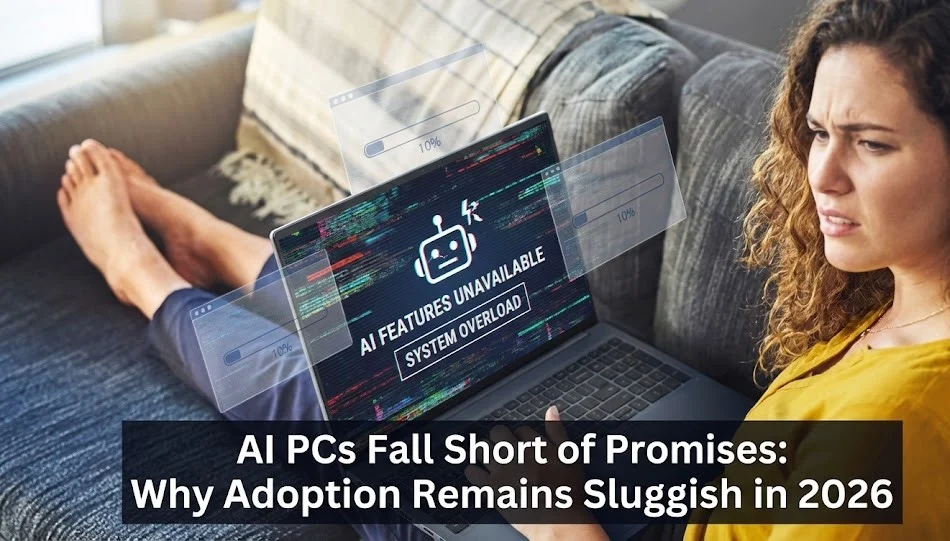
Despite massive marketing campaigns and industry hype, AI-powered personal computers are struggling to gain traction with consumers in 2026. What was promised as a transformative computing experience has instead become a cautionary tale of overpromising and underdelivering, leaving buyers unconvinced and adoption rates disappointing.
The Promise vs. Reality Gap
AI PCs were marketed as revolutionary devices that would fundamentally change how we interact with computers. The promise included:
- Intelligent task automation and workflow optimization
- Natural language computing interfaces
- Predictive performance enhancements
- Seamless integration with AI assistants
- Enhanced productivity through machine learning
However, the reality has been far more modest. Many AI PC features feel like incremental improvements rather than revolutionary changes, leading to widespread consumer disappointment.
Key Challenges Hampering Adoption
Confusing Messaging
One of the biggest obstacles has been unclear marketing communication. Manufacturers have struggled to articulate exactly what makes an AI PC different from traditional computers, leading to consumer confusion about the actual benefits and capabilities.
Underpowered Hardware
Many first-generation AI PCs have been criticized for having insufficient processing power to deliver on their AI promises. The specialized AI chips included in these systems often lack the computational resources needed for meaningful AI acceleration, resulting in performance that feels no different from conventional PCs.
Lack of Compelling Use Cases
Perhaps most critically, manufacturers have failed to demonstrate clear, compelling use cases that justify the premium pricing of AI PCs. Many of the AI features feel like novelties rather than essential productivity tools.
Market Performance and Consumer Response
Sales data from 2026 reveals the extent of the challenge:
- AI PC sales are significantly below initial projections
- Consumer satisfaction scores remain mixed
- Return rates are higher than traditional PC categories
- Enterprise adoption has been more cautious than expected
Industry analysts note that consumers are increasingly skeptical of AI marketing claims, having been burned by previous technology overpromises.
The Microsoft Copilot Integration Challenge
Microsoft’s integration of Copilot into Windows was expected to be a major driver of AI PC adoption. However, the implementation has faced several challenges:
- Inconsistent performance across different hardware configurations
- Privacy concerns about local AI processing
- Limited offline capabilities
- Integration issues with existing workflows
Industry Response and Course Corrections
Recognizing these challenges, major PC manufacturers are beginning to adjust their strategies:
Dell’s Strategic Reset
Dell has announced a strategic reset of its PC portfolio, with CEO Jeff Clarke leading efforts to restore the XPS brand as a premium anchor while clarifying the value proposition of AI-enhanced features.
Improved Hardware Specifications
Second-generation AI PCs are being designed with more powerful dedicated AI processing units and better integration between AI chips and traditional processors.
Clearer Value Propositions
Manufacturers are focusing on specific, measurable benefits rather than vague AI promises, such as:
- Quantifiable battery life improvements
- Specific productivity gains in common applications
- Enhanced security through AI-powered threat detection
Looking Ahead: The Path to AI PC Success
For AI PCs to achieve mainstream adoption, the industry must address several key areas:
Software Ecosystem Development
The success of AI PCs depends heavily on software developers creating applications that truly leverage AI capabilities. This requires:
- Better development tools and APIs
- Clear guidelines for AI integration
- Incentives for developers to create AI-native applications
User Education and Training
Consumers need better education about AI PC capabilities and how to effectively use AI features in their daily workflows.
Price-Performance Balance
AI PCs must demonstrate clear value at their premium price points, with measurable improvements in performance, productivity, or user experience.
Market Predictions for Late 2026
Industry experts predict that AI PC adoption will remain slow through the first half of 2026, with potential acceleration in the second half as:
- Hardware capabilities improve significantly
- Software ecosystem matures
- Use cases become more clearly defined
- Pricing becomes more competitive
Conclusion
The AI PC market of 2026 serves as a reminder that revolutionary technology requires more than just advanced hardware it needs clear value propositions, mature software ecosystems, and realistic consumer expectations. While the current generation of AI PCs may not have lived up to the hype, the lessons learned are paving the way for more successful implementations in the future.
The key for manufacturers is to focus on solving real problems rather than showcasing impressive technology demos. As the market matures and consumer understanding of AI capabilities grows, AI PCs may yet fulfill their transformative potential just not as quickly as initially promised.
For quality tech news, professional analysis, insights, and the latest updates on technology, follow TechTrib.com. Stay connected and join our fast-growing community.
TechTrib.com is a leading technology news platform providing comprehensive coverage and analysis of tech news, cybersecurity, artificial intelligence, and emerging technology. Visit techtrib.com.
Contact Information: Email: news@techtrib.com or for adverts placement adverts@techtrib.com
About The Author
