

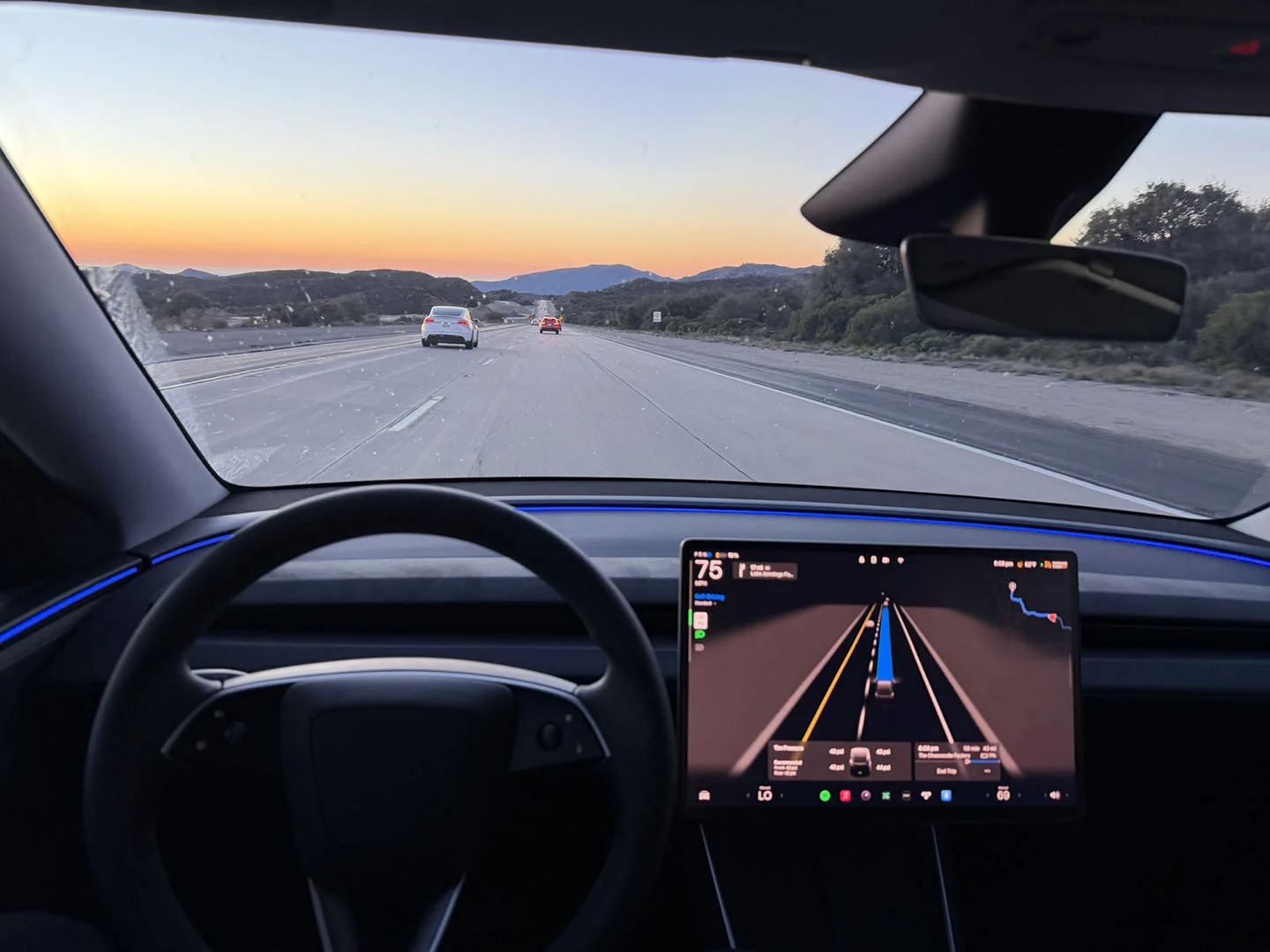
Image Source: Tesla Oracle Credit: @BLKMDL3 / X.
Tesla has announced a significant strategic pivot by discontinuing its popular Autopilot feature in the United States and Canada, instead pushing customers toward its more advanced Full Self-Driving (FSD) software through a subscription-based model. This bold move represents a major shift in Tesla’s autonomous driving strategy and could reshape the entire electric vehicle market’s approach to driver assistance technology.
End of an Era for Autopilot
The Autopilot feature, which has been a cornerstone of Tesla’s value proposition since 2014, will no longer be available as a standard or optional feature on new Tesla vehicles in North American markets. Instead, customers will need to subscribe to Tesla’s Full Self-Driving software to access highway driver-assist capabilities.
This decision affects Tesla’s entire North American lineup, including the Model 3, Model Y, Model S, Model X, and the upcoming Cybertruck. Existing Tesla owners with Autopilot will continue to have access to the feature, but new purchasers will face the choice between basic manual driving or the premium FSD subscription.
Subscription Model Strategy
Tesla’s Full Self-Driving software will now be offered exclusively through a monthly subscription service, with pricing expected to range from $199 to $299 per month depending on the vehicle model and feature set. This represents a significant departure from the previous one-time purchase option that cost up to $15,000.
The subscription model allows Tesla to generate recurring revenue while continuously updating and improving the software through over-the-air updates. CEO Elon Musk has indicated that this approach will accelerate the development of autonomous driving capabilities by providing a more predictable revenue stream for R&D investments.
Market Impact and Competitive Response
This strategic shift puts Tesla at odds with traditional automakers who typically include basic driver assistance features as standard equipment. Competitors like Ford, GM, and Mercedes-Benz have responded by emphasizing their commitment to providing advanced driver assistance systems without additional subscription fees.
Industry analysts suggest that Tesla’s move could backfire if customers perceive the elimination of Autopilot as reducing value for money. However, Tesla’s loyal customer base and the advanced capabilities of FSD may offset potential negative reactions.
Technological Advancement Focus
By consolidating its autonomous driving efforts into a single, premium offering, Tesla aims to accelerate the development of true self-driving capabilities. The company believes that the subscription model will provide better data collection and user feedback, essential for training its neural networks.
The FSD software includes advanced features like automatic lane changes, traffic light recognition, stop sign detection, and city street navigation – capabilities that go far beyond the highway-focused Autopilot system.
Regulatory and Safety Considerations
This transition comes amid increased regulatory scrutiny of Tesla’s autonomous driving claims. The National Highway Traffic Safety Administration has been investigating several accidents involving Tesla’s driver assistance systems, making the company’s commitment to advancing safety through better technology particularly significant.
Tesla maintains that the Full Self-Driving software represents a safer alternative to human driving, though the technology still requires active driver supervision and is not yet fully autonomous.
For quality tech news, professional analysis, insights, and the latest updates on technology, follow TechTrib.com. Stay connected and join our fast-growing community.
TechTrib.com is a leading technology news platform providing comprehensive coverage and analysis of tech news, cybersecurity, artificial intelligence, and emerging technology. Visit techtrib.com.
Contact Information: Email: news@techtrib.com or for adverts placement adverts@techtrib.com
About The Author
