

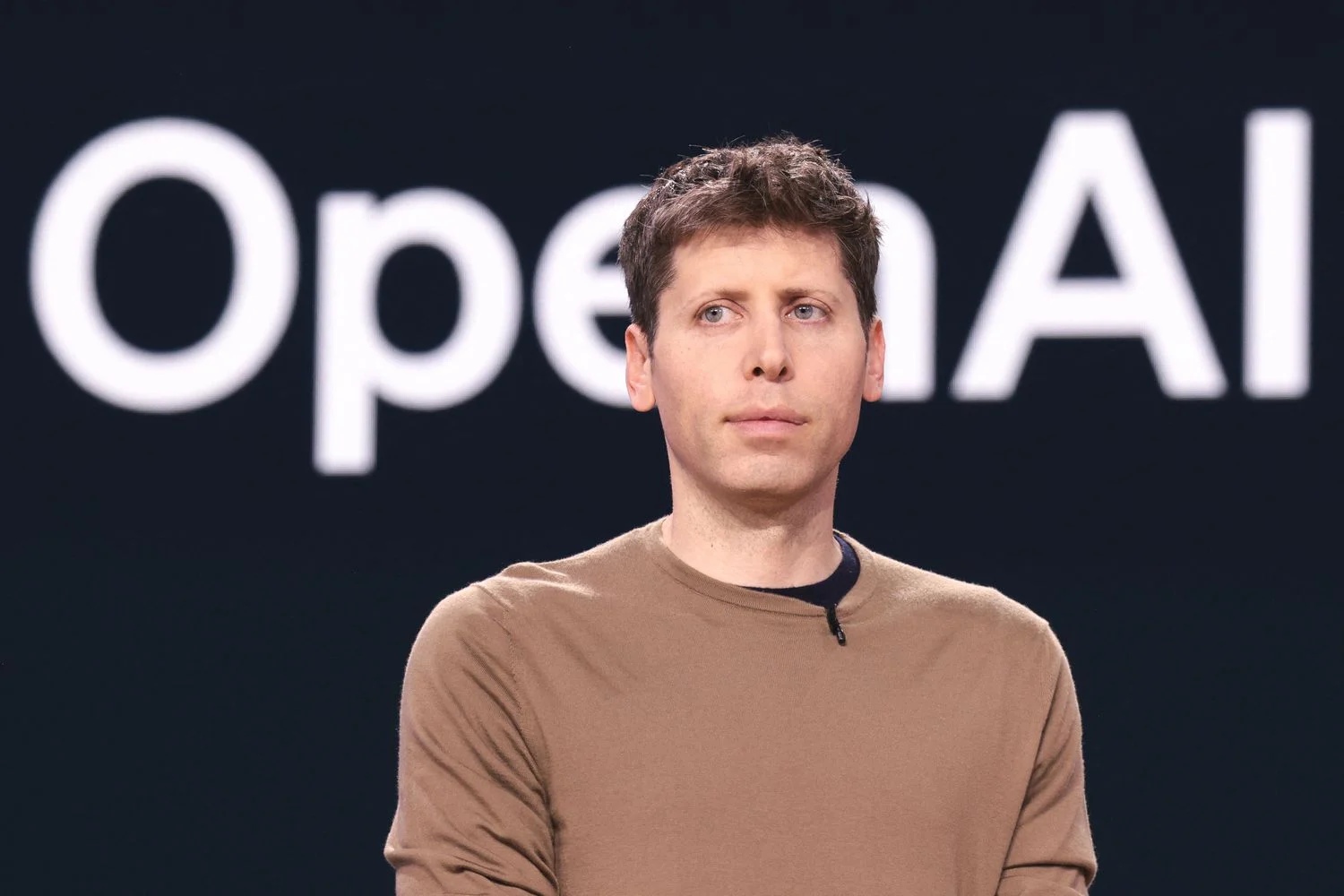
Image Credit: JASON REDMOND / AFP via Getty Images
In a move that deepens the circular investment patterns within Silicon Valley’s AI ecosystem, OpenAI has made a significant investment in CEO Sam Altman’s brain-computer interface startup Merge Labs, which emerged from stealth mode with a massive $250 million seed round at an $850 million valuation. The investment represents OpenAI’s largest single check in the funding round, highlighting the growing convergence between artificial intelligence and neurotechnology.
Details of the Investment
Merge Labs, which describes itself as a “research lab” dedicated to “bridging biological and artificial intelligence to maximize human ability,” officially launched on Thursday after months of speculation about Altman’s involvement in the brain-computer interface space. The startup’s ambitious mission centers on developing non-invasive technologies that can interface with neurons using molecules instead of traditional electrodes, utilizing deep-reaching modalities like ultrasound to transmit and receive information.
According to sources familiar with the matter, OpenAI wrote the largest single check in Merge Labs’ $250 million seed round, which values the company at $850 million. This substantial investment comes as the brain-computer interface market experiences unprecedented growth, with applications ranging from medical treatments to human enhancement technologies.
Industry Impact and Competition
The investment intensifies the competition between Sam Altman and Elon Musk, whose company Neuralink is also developing brain-computer interface technology. However, while Neuralink requires invasive surgical procedures to implant electrode threads directly into the brain, Merge Labs is pursuing a non-invasive approach that could potentially reach a broader market.
Neuralink, which last raised a $650 million Series E at a $9 billion valuation in June 2025, has already demonstrated its technology in human trials, allowing paralyzed patients to control devices with their thoughts. The competitive landscape in brain-computer interfaces is heating up as both companies race to commercialize their respective approaches.
Expert Analysis
Industry experts view the OpenAI investment as strategically significant beyond the financial commitment. “Brain computer interfaces (BCIs) are an important new frontier,” OpenAI stated in a blog post. “They open new ways to communicate, learn, and interact with technology. BCIs will create a natural, human-centered way for anyone to seamlessly interact with AI.”
The partnership between OpenAI and Merge Labs extends beyond funding, with plans for collaboration on scientific foundation models and frontier tools to accelerate research and development. OpenAI noted that AI will help advance bioengineering, neuroscience, and device engineering, while the brain interfaces will benefit from AI operating systems capable of interpreting intent and adapting to individual users.
Market Response
The announcement has generated significant interest in the venture capital community, with many viewing brain-computer interfaces as the next major frontier in human-computer interaction. The substantial valuation for a company emerging from stealth mode reflects investor confidence in both the technology’s potential and the team’s ability to execute.
Merge Labs’ co-founding team includes notable figures from the tech industry: Alex Blania and Sandro Herbig from Tools for Humanity (creators of the World orb project), Tyson Aflalo and Sumner Norman from Forest Neurotech, and Mikhail Shapiro, a researcher at Caltech. This diverse expertise spanning AI, neurotechnology, and academic research positions the company to tackle the complex challenges of brain-computer interfaces.
What This Means
The circular nature of this investment raises important questions about the interconnected relationships within Silicon Valley’s AI ecosystem. If Merge Labs succeeds in developing effective brain-computer interfaces, it could drive more users to OpenAI’s platforms, potentially justifying the investment while increasing the value of a startup that Altman owns using resources from a company he leads.
This investment pattern reflects a broader trend in the AI industry, where leading figures maintain stakes in multiple companies that often have complementary or overlapping interests. OpenAI has previously invested in several startups connected to Altman, including Red Queen Bio, Rain AI, and Harvey, while also entering commercial agreements with companies Altman personally owns or chairs.
The development also aligns with Altman’s long-held vision of “the merge” – the idea that humans and machines will eventually merge to create enhanced capabilities. In a 2017 blog post, Altman predicted this convergence would occur between 2025 and 2075, describing it as humanity’s “best-case scenario” for surviving alongside superintelligent AI.
As the brain-computer interface market continues to evolve, the collaboration between OpenAI and Merge Labs could accelerate the development of technologies that fundamentally change how humans interact with artificial intelligence systems. The success of this venture will likely influence future investments and partnerships in the rapidly expanding neurotechnology sector.
For quality tech news, professional analysis, insights, and the latest updates on technology, follow TechTrib.com. Stay connected and join our fast-growing community.
TechTrib.com is a leading technology news platform providing comprehensive coverage and analysis of tech news, cybersecurity, artificial intelligence, and emerging technology. Visit techtrib.com.
Contact Information: Email: news@techtrib.com or for adverts placement adverts@techtrib.com
About The Author
