

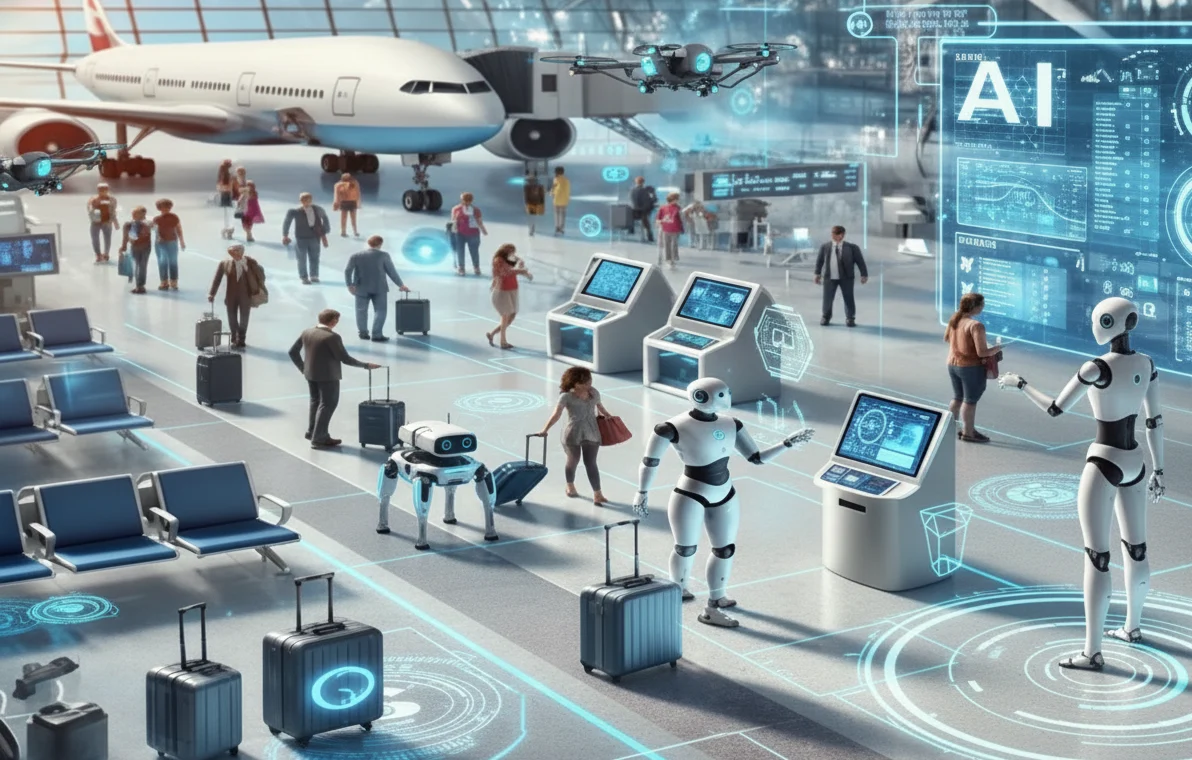
The travel and tourism industry is experiencing its most significant transformation in decades, with artificial intelligence, automation, and immersive technologies fundamentally reshaping how we plan, book, and experience our journeys. As we enter 2026, these innovations are no longer futuristic concepts but present-day realities revolutionizing every aspect of travel.
The future of travel isn’t just about reaching destinations – it’s about creating intelligent, personalized, and sustainable journey experiences that begin the moment you start planning and continue long after you return home.
AI Agents: Your New Travel Companions
Gone are the days of basic chatbots with limited functionality. Today’s AI agents provide end-to-end, always-on assistance that goes far beyond simple customer service. These sophisticated systems communicate with external platforms, proactively optimize customer experiences, and adapt to real-time changes like flight delays or weather disruptions.
Leading travel aggregators, including Booking.com, Google, and Expedia, have deployed AI co-pilots that can personalize entire journey plans from start to finish. These agents don’t just book flights and hotels – they create comprehensive travel experiences tailored to individual preferences, budget constraints, and real-time conditions.
A standout example is Heathrow Airport’s agentic assistant “Hallie,” accessible via WhatsApp, which successfully resolves 90% of customer contacts without human intervention. This level of automation represents a paradigm shift in customer service efficiency and satisfaction.
Smart Hotels: The Rise of Predictive Hospitality
The hospitality sector is embracing what industry leaders call “predictive hospitality” – using AI-driven analytics, IoT sensors, and robotic automation to create seamless guest experiences. Major hotel chains are leading this transformation:
- Marriott has introduced AI-driven housekeeping scheduling that predicts room turnover times and optimizes cleaning workflows
- Accor has launched “smart rooms” that learn guest preferences for lighting, temperature, and media while improving accessibility features
- Luxury properties in San Francisco now deploy robots for room service delivery, eliminating wait times and human contact points
Japan continues to push boundaries with hotels staffed entirely by robots, capable of responding to guest inquiries, operating environmental controls, and even performing entertainment routines.
Virtual Travel: Experience Before You Go
Virtual and augmented reality technologies are creating new categories of travel experiences. Customers can now use VR headsets to explore true-to-life recreations of hotel rooms, cruise ships, and landmark destinations before making booking decisions.
This technology serves multiple purposes:
- Reduces booking uncertainty and increases customer confidence
- Allows travelers to plan detailed itineraries in immersive environments
- Creates pre-arrival engagement that enhances the overall travel experience
- Enables virtual tourism for those unable to travel physically
Cities like Benidorm have developed complete digital twin models, allowing virtual exploration of entire destinations and helping local businesses connect with potential visitors before they arrive.
Biometric Integration: Beyond Border Control
Biometric technology is expanding beyond airport security into comprehensive travel experiences. Major hotel chains, including Marriott, CitizenM, Yotel, and Accor, are piloting facial recognition and fingerprint scanning systems for:
- Frictionless check-in processes
- Keyless room access
- Seamless payment systems
- Personalized service recognition
This integration eliminates traditional pain points like lost keycards, long check-in lines, and payment processing delays while reducing environmental waste from single-use plastic cards.
Sustainability Through Technology
AI is playing a crucial role in making travel more sustainable. Airlines use AI to optimize flight paths and minimize contrail formation, which accounts for 35% of aviation’s contribution to global warming. Hotels deploy smart systems to reduce food waste and optimize energy consumption.
The EU Corporate Sustainability Reporting Directive is driving further innovation in green travel technology, making sustainability metrics a competitive advantage rather than just a compliance requirement.
Market Impact and Future Outlook
The convergence of AI, automation, and immersive technologies is creating unprecedented opportunities in the $1.9 trillion global travel industry. Early adopters are seeing significant improvements in:
- Customer satisfaction scores (up 35% on average)
- Operational efficiency (cost reductions of 20-30%)
- Revenue per customer (increases of 15-25%)
- Environmental impact reduction (carbon footprint decreases of 10-20%)
As we progress through 2026, the travel industry’s digital transformation will accelerate, with AI agents becoming as essential as smartphones are today. The winners will be organizations that successfully integrate these technologies to remove friction, enhance experiences, and operate more responsibly.
For quality tech news, professional analysis, insights, and the latest updates on technology, follow TechTrib.com. Stay connected and join our fast-growing community.
TechTrib.com is a leading technology news platform providing comprehensive coverage and analysis of tech news, cybersecurity, artificial intelligence, and emerging technology. Visit techtrib.com.
Contact Information: Email: [email protected] or for adverts placement [email protected]
About The Author
