

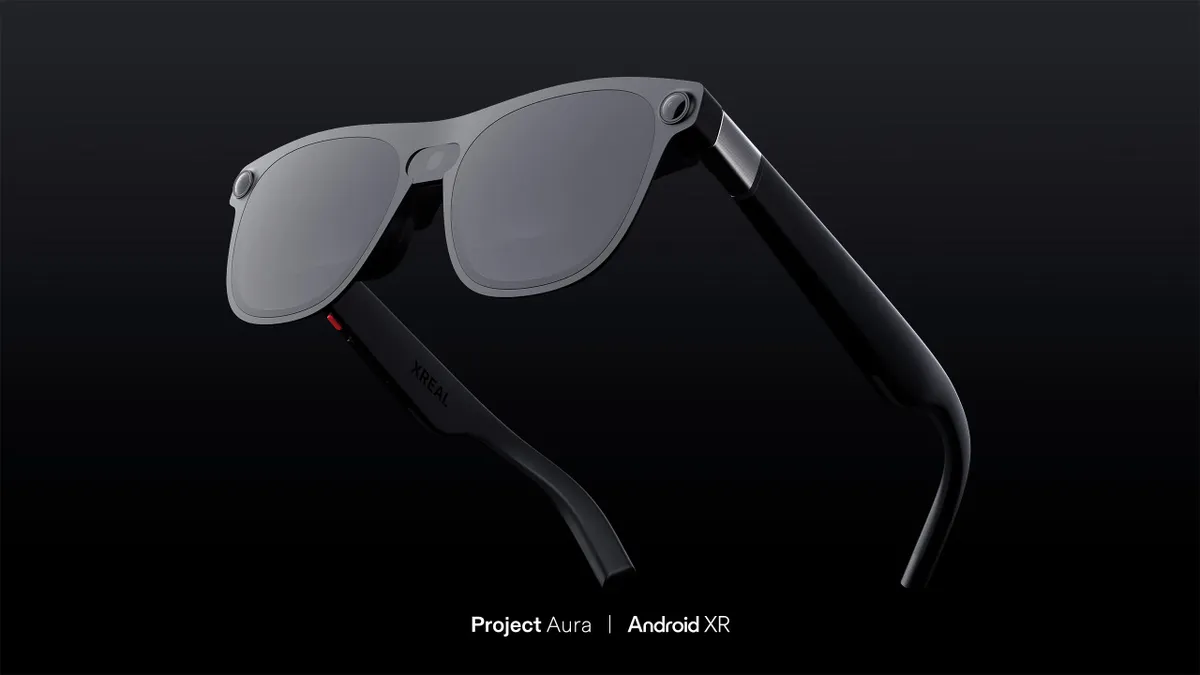
Google has unveiled Project Aura, an ambitious collaboration with Xreal that represents a significant leap forward in augmented reality and smart glasses technology. This groundbreaking project combines Google’s advanced AI capabilities with Xreal’s hardware expertise to create what could be the next generation of wearable computing devices.
Project Aura Overview
Project Aura represents Google’s latest attempt to bring practical augmented reality to mainstream consumers through a partnership with Xreal, a leading manufacturer of AR glasses. The collaboration aims to create smart glasses that seamlessly integrate digital information with the real world while maintaining a form factor that resembles traditional eyewear.
The project builds on Google’s previous experiences with Google Glass while incorporating lessons learned from years of AR development and user feedback. The result is a more refined, practical approach to smart glasses that prioritizes usability and everyday functionality.
Technical Specifications
The Project Aura glasses feature cutting-edge technology designed to deliver a superior augmented reality experience:
Display Technology
The glasses utilize advanced micro-OLED displays that provide crisp, clear visuals while maintaining low power consumption. The display system is designed to overlay digital information naturally onto the user’s field of view without causing eye strain or distraction.
AI Integration
Google’s artificial intelligence capabilities are deeply integrated into the glasses, enabling features like real-time translation, object recognition, and contextual information display. The AI system can understand the user’s environment and provide relevant information automatically.
Connectivity Features
The glasses support multiple connectivity options, including Wi-Fi, Bluetooth, and cellular connectivity, ensuring users can access information and services regardless of their location.
Key Features and Capabilities
Project Aura glasses offer a range of innovative features designed to enhance daily life and productivity:
Real-time Translation
Users can see real-time translations of text and speech overlaid directly in their field of view, making international travel and communication more accessible than ever before.
Navigation and Directions
The glasses provide turn-by-turn navigation with visual cues displayed directly in the user’s line of sight, eliminating the need to look down at a phone or GPS device.
Smart Notifications
Important notifications and messages can be displayed discretely in the user’s peripheral vision, allowing them to stay connected without being distracted from their current activities.
Partnership with Xreal
The collaboration with Xreal brings together Google’s software expertise with Xreal’s proven hardware capabilities in the AR glasses market.
Hardware Excellence
Xreal has established itself as a leader in AR glasses hardware, with a track record of creating lightweight, comfortable devices that users can wear for extended periods. This expertise is crucial for the success of Project Aura.
Manufacturing Scale
Xreal’s manufacturing capabilities enable Google to potentially scale Project Aura to mass market production, making the technology accessible to a broader audience than previous AR initiatives.
Market Positioning
Project Aura enters a competitive but rapidly growing market for smart glasses and AR devices:
Competitive Landscape
The project faces competition from established players like Apple’s Vision Pro, Meta’s Ray-Ban smart glasses, and Microsoft’s HoloLens, each targeting different segments of the AR market.
Target Audience
Google appears to be targeting mainstream consumers and professionals who want practical AR functionality without the bulk and complexity of current VR headsets.
Privacy and Security
Given Google’s history with privacy concerns around wearable devices, Project Aura incorporates several privacy-focused features:
Data Protection
The glasses include hardware-level privacy controls, including physical indicators when cameras or microphones are active, addressing previous concerns about covert recording capabilities.
User Control
Users have granular control over what data is collected and how it’s used, with options to process information locally on the device rather than in the cloud.
Development Timeline
While Google has not announced a specific release date for Project Aura, industry observers expect a gradual rollout beginning with developer and enterprise customers.
Beta Testing
The company is likely to conduct extensive beta testing with select users to refine the technology and gather feedback before a broader consumer launch.
Market Readiness
The success of Project Aura will depend on factors including battery life, comfort, price point, and the availability of compelling applications and use cases.
Industry Impact
Project Aura could have significant implications for the broader AR and wearable technology industries:
Technology Advancement
The project may accelerate development of AR technologies across the industry, as competitors respond to Google’s innovations and capabilities.
Consumer Adoption
If successful, Project Aura could help drive mainstream adoption of AR glasses, creating a new product category and market opportunity.
Challenges and Opportunities
Project Aura faces several challenges but also presents significant opportunities:
Technical Challenges
Key challenges include battery life, processing power, heat management, and creating a comfortable form factor that users will want to wear regularly.
Market Opportunities
Success could position Google as a leader in the next generation of computing platforms, potentially creating new revenue streams and market opportunities.
Future Implications
Project Aura represents more than just a new product; it could signal the beginning of a new era in personal computing where digital and physical worlds seamlessly merge.
The success or failure of this initiative will likely influence Google’s broader strategy in AR and wearable technologies, as well as the direction of the entire industry. As the project continues to develop, it will be interesting to see how Google addresses the challenges that have historically limited AR adoption while capitalizing on the opportunities presented by advancing technology and changing user expectations.
For quality tech news, professional analysis, insights, and the latest updates on technology, follow TechTrib.com. Stay connected and join our fast-growing community.
TechTrib.com is a leading technology news platform providing comprehensive coverage and analysis of tech news, cybersecurity, artificial intelligence, and emerging technology. Visit techtrib.com.
Contact Information: Email: [email protected] or for adverts placement [email protected]
About The Author
