

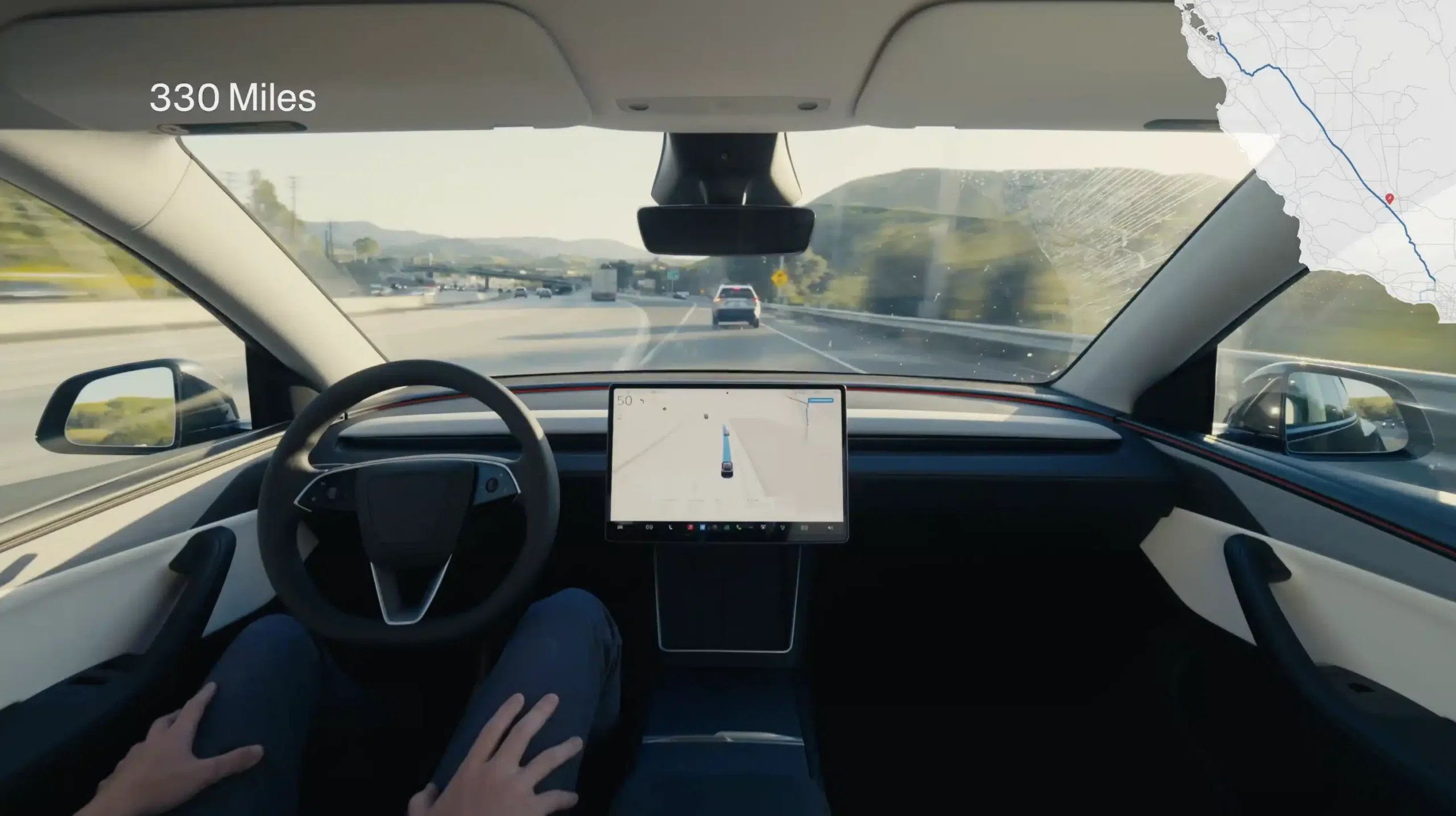
Tesla continues to push the boundaries of autonomous driving technology with the launch of its highly anticiped Full Self-Driving (FSD) V14.2 trial program. As the automotive industry watches closely, Tesla’s latest iteration represents a significant milestone in the company’s journey toward fully autonomous vehicles. The 30-day trial program marks another critical step in democratizing access to advanced autonomous driving capabilities, allowing a broader user base to experience the cutting-edge technology that has been years in development.
FSD V14.2 Trial Program Details
Tesla’s new 30-day FSD V14.2 trial program is designed to provide eligible Tesla owners with an unprecedented opportunity to experience the latest autonomous driving features without long-term commitment. The program targets Tesla owners with vehicles equipped with the necessary hardware and software infrastructure, ensuring a seamless integration with existing Tesla ecosystems. Availability has been strategically rolled out across multiple regions, with priority given to early adopters and existing FSD beta participants.
The trial program encompasses a comprehensive suite of autonomous driving features, including enhanced city street navigation, improved traffic light recognition, and advanced intersection handling. Tesla has implemented a tiered approach to the rollout, allowing the company to gather real-world data and user feedback while maintaining safety standards. Participants in the trial program gain access to features previously available only to select beta testers, democratizing access to technology that represents years of research and development investment.
Safety remains paramount in the trial program design. Tesla has implemented comprehensive monitoring systems and user safeguards to ensure that trial participants can confidently engage with the technology. The program includes detailed onboarding processes, educational materials, and continuous monitoring of vehicle performance metrics. This approach reflects Tesla’s commitment to responsible autonomous driving development and deployment.
Autonomous Driving Technology Improvements
FSD V14.2 represents a substantial leap forward in autonomous driving capabilities, incorporating advances across multiple technological domains. The latest version features significantly improved neural network architectures that enhance the vehicle’s ability to interpret complex driving scenarios. Machine learning models have been retrained on millions of miles of real-world driving data, resulting in more nuanced decision-making and improved handling of edge cases that previously challenged autonomous systems.
Technical improvements in V14.2 include enhanced object detection capabilities that allow vehicles to identify and respond to a wider variety of road obstacles and hazards. The system now demonstrates superior performance in adverse weather conditions, including rain and fog, where previous iterations showed limitations. Computer vision algorithms have been optimized to process visual information more efficiently, reducing latency and enabling faster response times to dynamic road conditions.
Performance metrics released by Tesla indicate substantial improvements across key autonomous driving benchmarks. The system now achieves higher accuracy rates in traffic light and stop sign recognition, critical capabilities for urban autonomous driving. Intersection navigation has been refined through advanced prediction algorithms that anticipate the behavior of other vehicles and pedestrians. These improvements collectively represent a meaningful step toward the company’s long-term vision of fully autonomous vehicles capable of operating safely across diverse driving environments.
Global Expansion and Market Impact
Tesla’s FSD expansion into European markets represents a strategic move to establish leadership in the global autonomous driving sector. The company has been working with European regulatory bodies to ensure compliance with regional safety standards and data protection requirements. This expansion demonstrates Tesla’s confidence in the maturity of its autonomous driving technology and its readiness for deployment in some of the world’s most complex driving environments.
The European rollout includes adaptations to local driving conditions, traffic patterns, and regulatory frameworks. Tesla has invested in localized data collection and model training to ensure that FSD V14.2 performs optimally in European contexts. This approach reflects the company’s understanding that autonomous driving systems must be tailored to regional characteristics to achieve optimal performance and user acceptance.
From a competitive positioning perspective, Tesla’s FSD advancement strengthens its market position against other autonomous driving developers. Traditional automotive manufacturers and technology companies have invested heavily in autonomous driving research, but Tesla’s integrated approach—combining vehicle hardware, software, and real-world data collection—provides distinct advantages. The company’s ability to rapidly iterate and deploy improvements across its global fleet creates a competitive moat that becomes increasingly difficult for competitors to overcome.
Industry Implications
Tesla’s FSD V14.2 launch has significant implications for the broader autonomous vehicle industry. The advancement demonstrates that practical, deployable autonomous driving technology is becoming increasingly viable, potentially accelerating industry-wide adoption timelines. Competitors including Waymo, Cruise, and traditional automotive manufacturers are intensifying their autonomous driving efforts in response to Tesla’s progress.
The technology’s advancement raises important questions about regulatory frameworks and safety standards for autonomous vehicles. Policymakers worldwide are watching Tesla’s deployment closely to inform future regulations. The success of the FSD V14.2 trial program could influence how governments approach autonomous vehicle certification and deployment authorization.
Insurance and liability considerations are also evolving in response to advancing autonomous driving technology. As vehicles become increasingly capable of autonomous operation, the insurance industry must adapt its models and risk assessment frameworks. Tesla’s continued advancement in this space will likely accelerate these industry-wide adjustments.
The FSD V14.2 launch also highlights the importance of data in autonomous driving development. Tesla’s advantage in collecting real-world driving data from its global fleet provides a significant competitive advantage that other companies are working to replicate through partnerships and alternative data collection strategies.
Get more insights and updates on technology, follow TechTrib.com and stay connected with the latest trends.
TechTrib.com is a leading technology news platform providing comprehensive coverage and analysis of tech news, cybersecurity, artificial intelligence, and emerging technology. Visit techtrib.com.
Contact Information: Email: [email protected] or for adverts placement [email protected]
About The Author
